
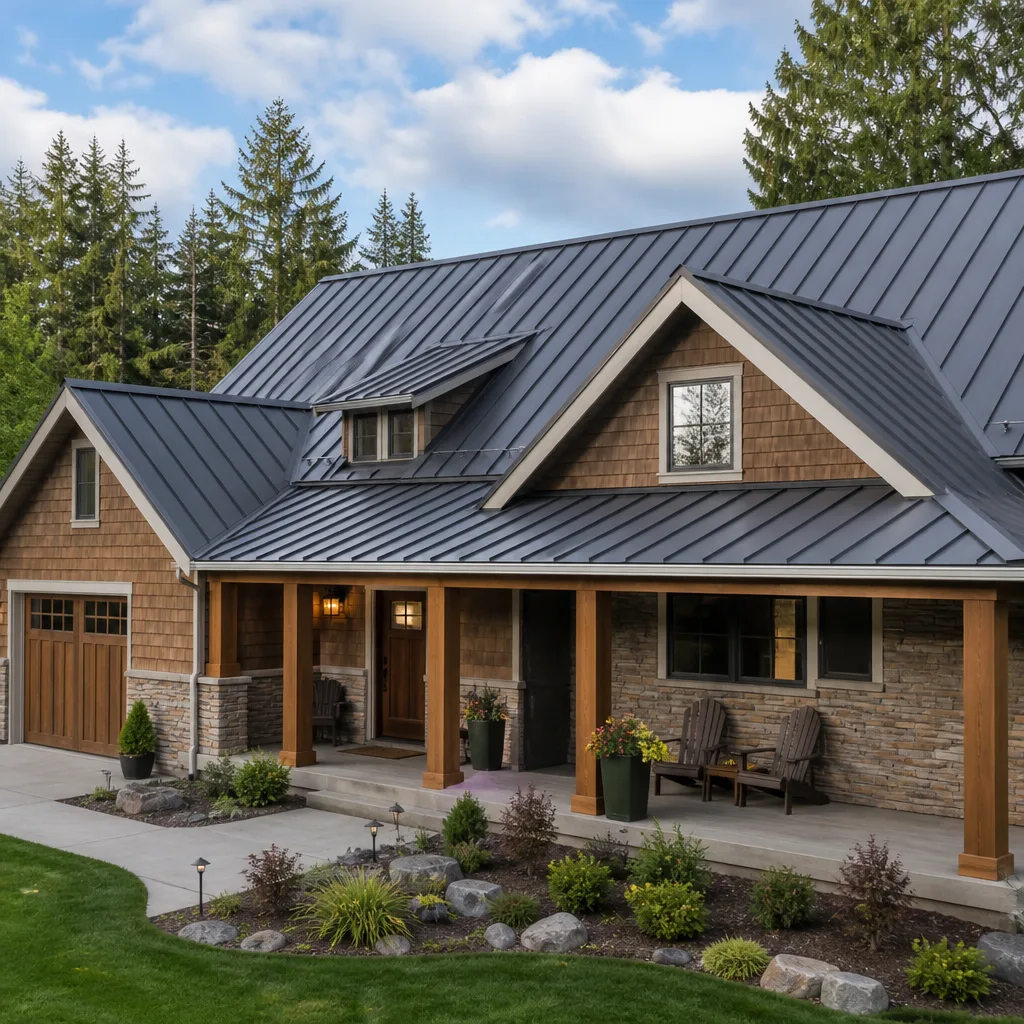
 Metal roofing
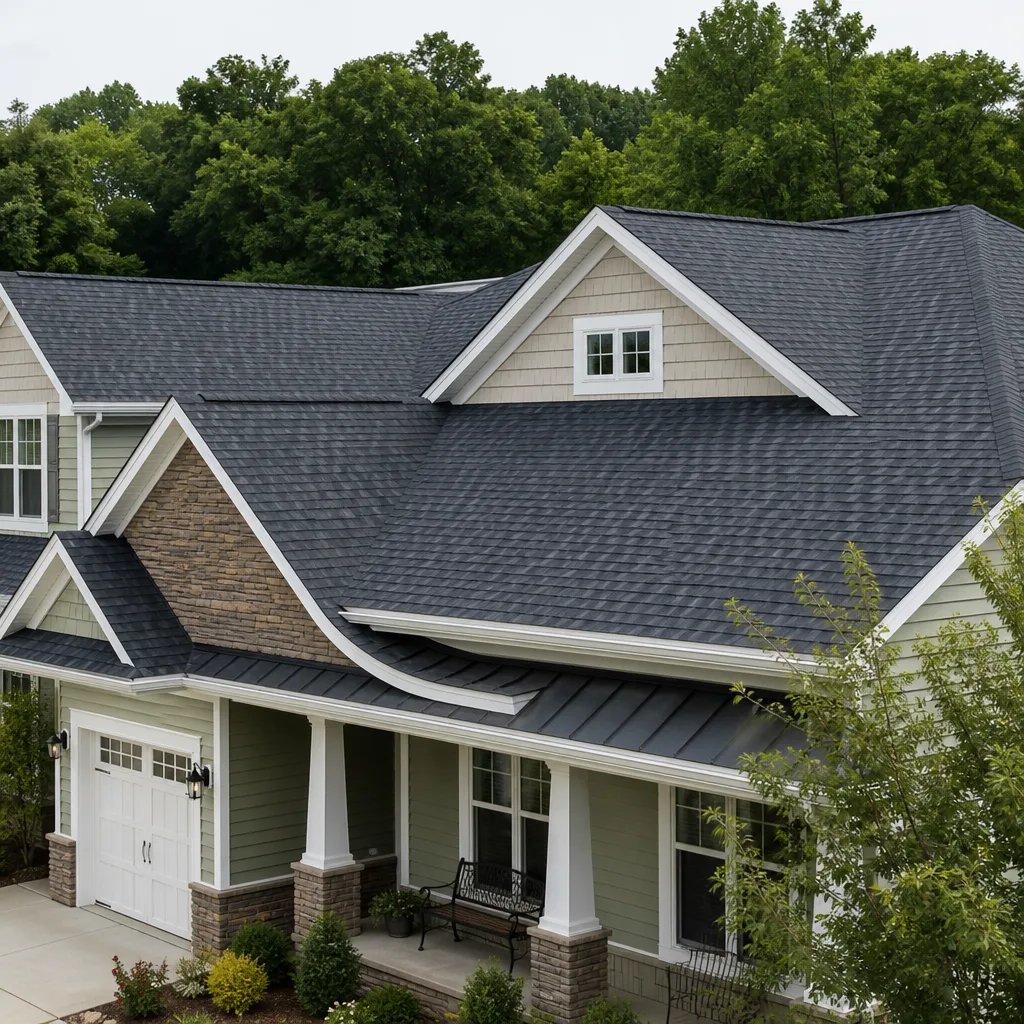
 Architectural shingles
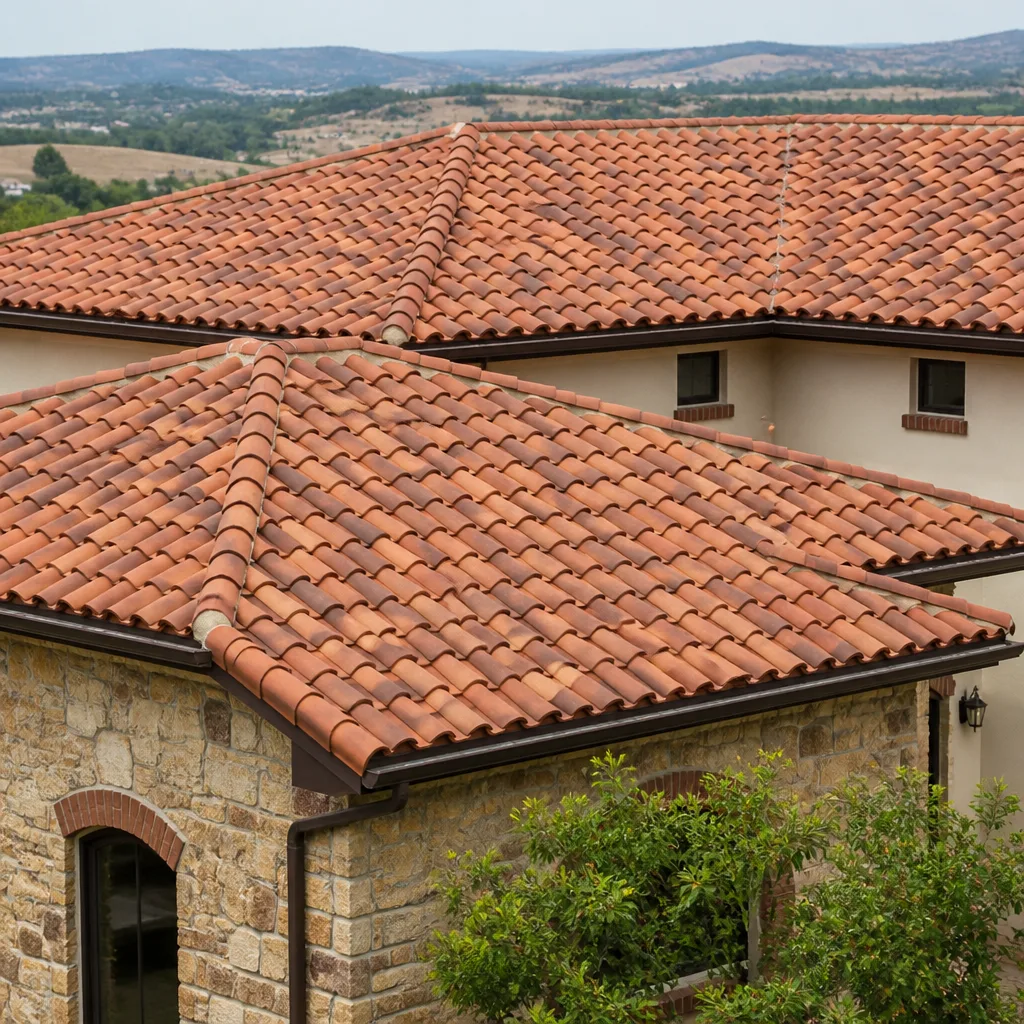 Tile roofing
 GAF
GAF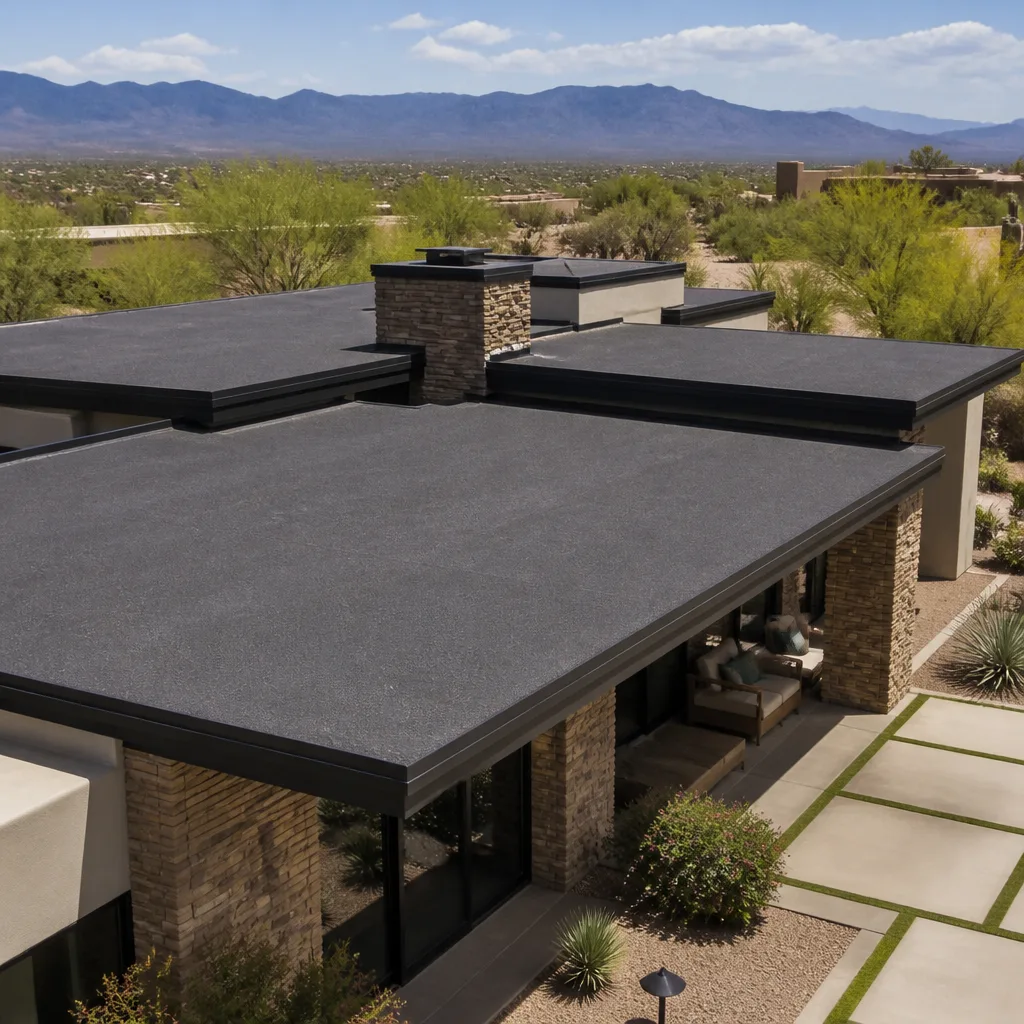 Flat & low-slope
Free roof inspection with deck photos before we talk money - GAF and Owens Corning certified installation
IKO Ridge Vent Installation: The Thousand Oaks Owner’s Guide
If you’re looking for IKO ridge vent installation in Thousand Oaks, here’s the direct answer: we stock IKO-compatible ridge vent on our trucks, and a complete ridge vent replacement on a typical single-family home in Thousand Oaks runs between $450 and $900 installed, depending on the linear footage of your ridge line. Most IKO ridge vent jobs take us half a day, and we can schedule within the week.
Most homeowners discover their ridge vent has failed the hard way: a bedroom ceiling shows a water stain after a December rain, or an attic that used to stay under 110°F in August suddenly feels like a kiln. The ridge vent is the exhaust half of your roof’s ventilation system, and when it cracks, clogs, or delaminates, heat and moisture have nowhere to go. In Ventura County’s hot summers and occasional heavy winter rains, a failed IKO ridge vent isn’t just an inefficient roof. It’s an invitation for warped sheathing, premature shingle aging, and mold in the attic insulation.
Here’s a quick list of what matters:
- We install IKO-compatible ridge vent on all IKO shingle roofs, plus GAF, Owens Corning, and CertainTeed systems where the homeowner wants a universal-fit option.
- Every job gets a written price before work starts. No exceptions, no change orders on install day.
- The work is covered by our 365-Day Done Right Promise in writing.
- Your technician’s name and photo are sent to you before they arrive. They’ll badge in at the door with a photo ID.
Which IKO Models This Applies To
IKO makes a few different ridge vent products, and the one you need depends on what’s already on your roof. The most common in Thousand Oaks is the IKO Ultra HP Ridge Vent, a low-profile, shingle-over vent made from a synthetic filter media that allows air to exhaust along the entire peak. There’s also the IKO RidgFast, a rigid plastic vent with an external baffle, and the IKO Armourvent Multi, a universal-design vent that works across multiple shingle brands.
To identify what you have, look at the end of the ridge from the gutter line or stand back and check the roof’s peak. If the vent sits flat and is nearly invisible under the cap shingles, it’s likely a shingle-over style like the Ultra HP. If you can see a visible bump or raised profile along the ridge, you likely have a RidgFast or a competitor’s external-baffle vent. Checking the attic side can also help: look for the vent’s fabric or plastic matrix between the roof decking at the peak. Many IKO ridge vents are labeled with the IKO name stamped on the underside.
One IKO-specific gotcha worth knowing: the older IKO Ridge Vent and the newer Ultra HP use different filter media thicknesses. If your home was reroofed before 2015, there’s a strong chance the original vent was the older profile. We keep both thicknesses on hand, because mixing the two under cap shingles creates an uneven ridge line that looks wrong and seals poorly. When we match an IKO ridge vent to an IKO shingle roof, the vent’s net free area rating matters too: for a standard 20-foot ridge, you want a vent rated at least 15 to 18 square inches of net free area per linear foot to move enough air for our summer heat.
Styles & brands we work with
Signs Your IKO Ridge Vent Installation Is Failing
- Shingle granules collecting at gutter downspouts. If IKO shingle granules are washing down in unusual amounts, and your roof is older, the cap shingles over the ridge vent may be failing faster than the field shingles below. Ridge caps take direct sun at the peak and degrade first. Once the cap shingles crack, moisture gets under them and works its way into the vent material.
- Attic temperature climbing into the 120s on a 90-degree day. A working ridge vent should keep an attic between 10 and 20 degrees above outside air temperature. If your attic is hitting 115°F at noon on an 85°F day, the exhaust vent is likely clogged with dust, cobwebs, or old insulation that’s drifted against the underside.
- Water staining on the ceiling just below the peak. Unlike a leak near a roofline or valley, a ridge vent failure with water staining tends to show up on the ceiling near the top of an interior wall at the home’s center. That’s condensation or direct moisture penetration following the ridge line down.
- A ridge line that looks wavy or uneven from the street. If the ridge vent has delaminated or the cap shingles have loosened, the ridge line won’t lay flat. IKO shingle-over vents especially tend to telegraph their condition through the cap shingle line.
- Musty attic smell that won’t go away even in dry weather. Moisture trapped in insulation from a failed vent creates that sour, stale smell. It often shows up before any visible stain does.
See the difference
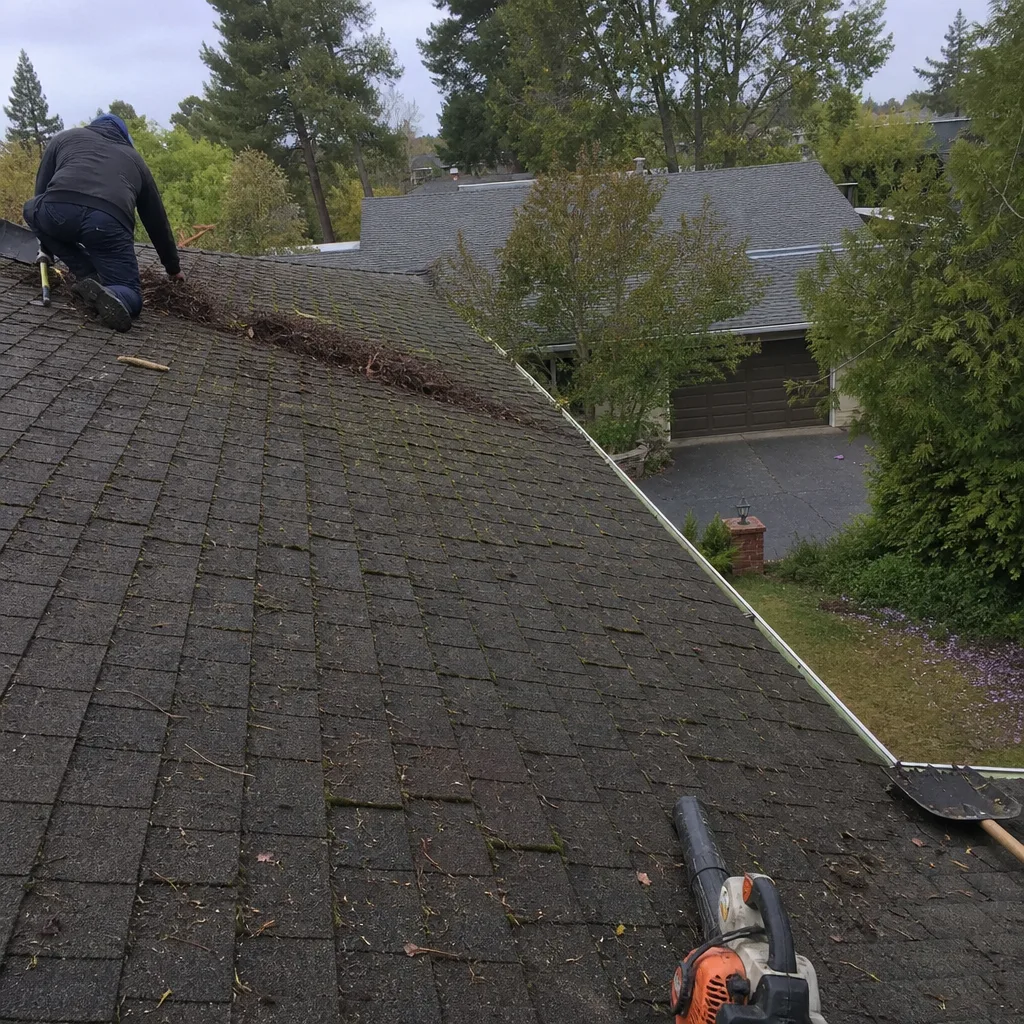 Before
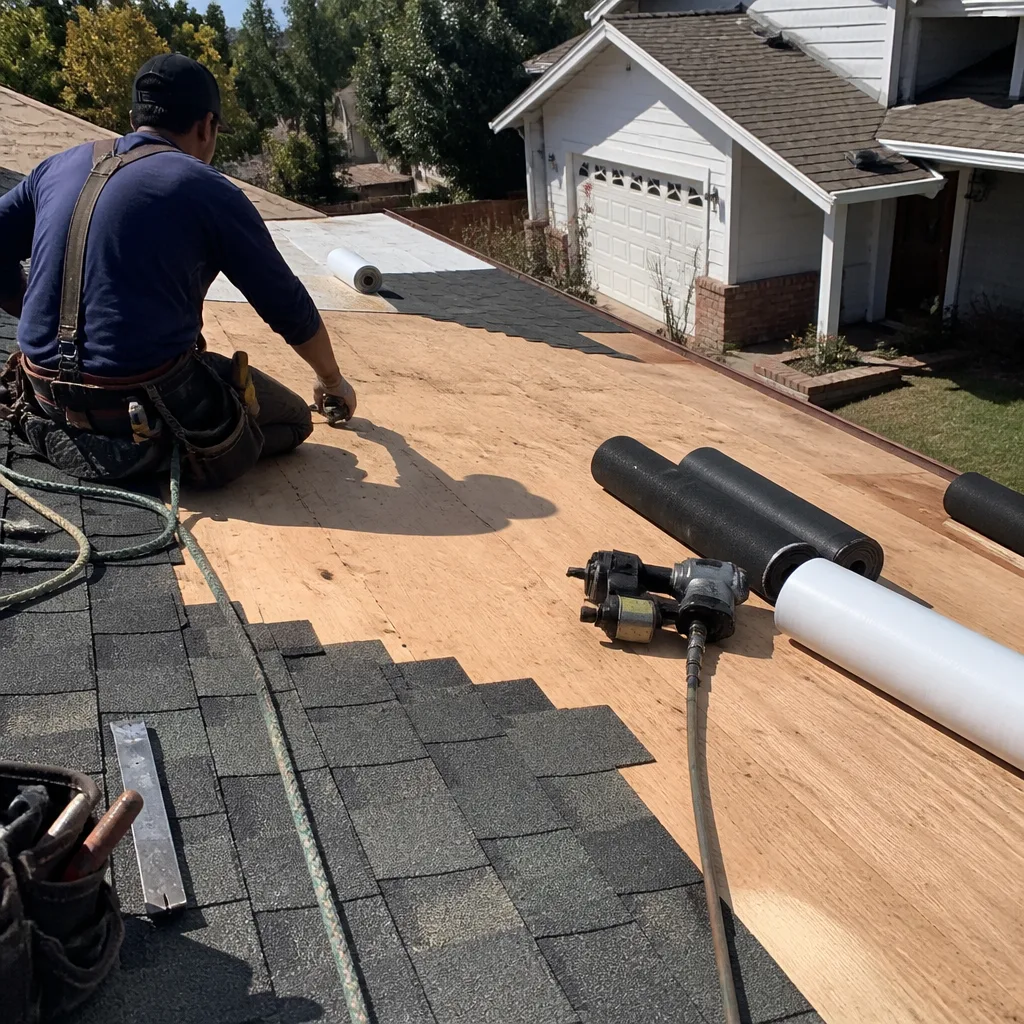 After
After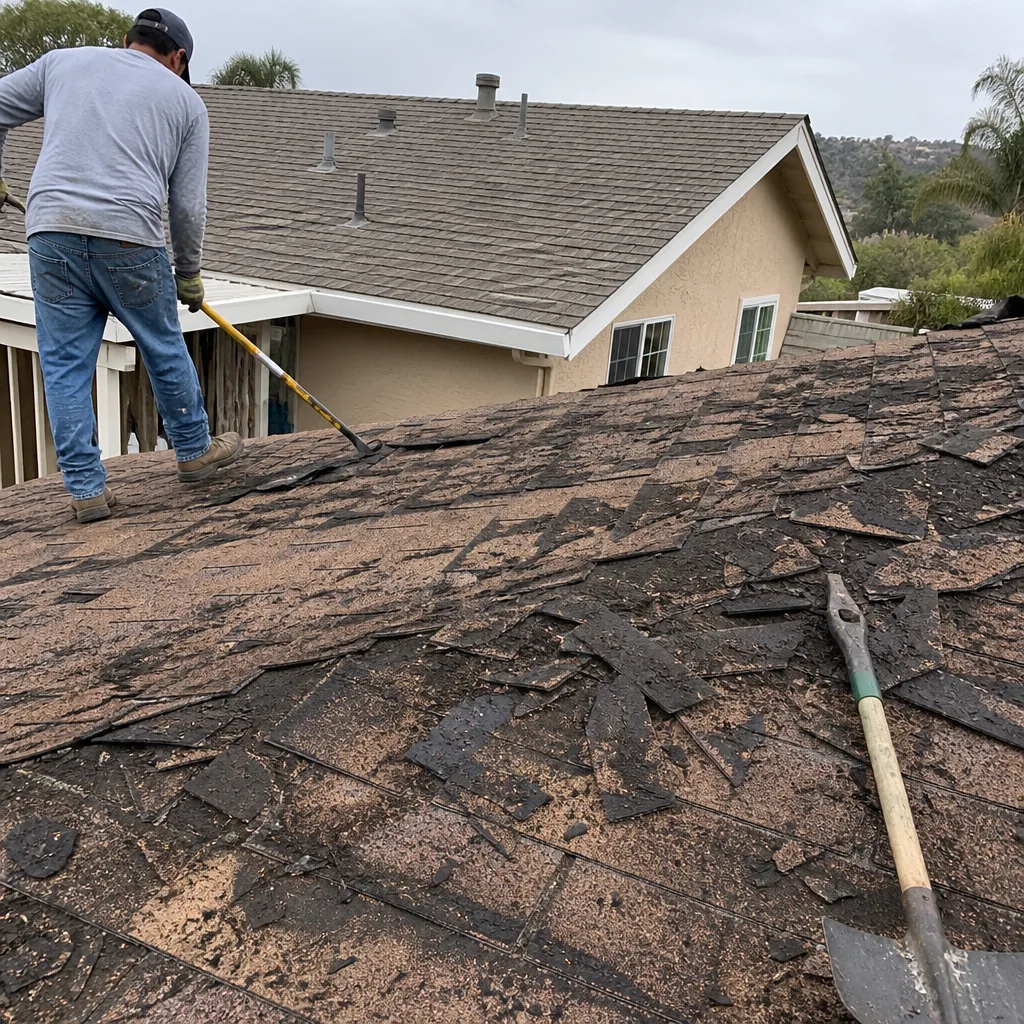 Before
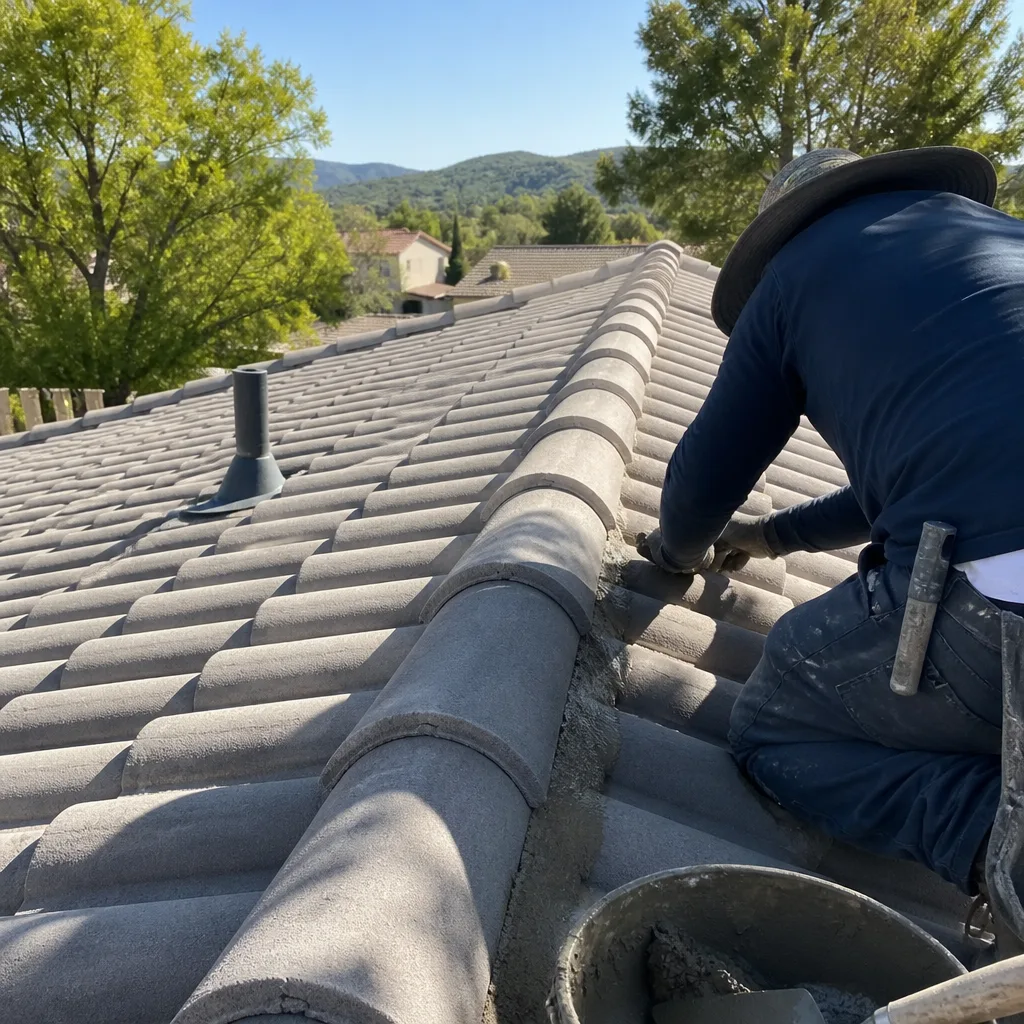 After
After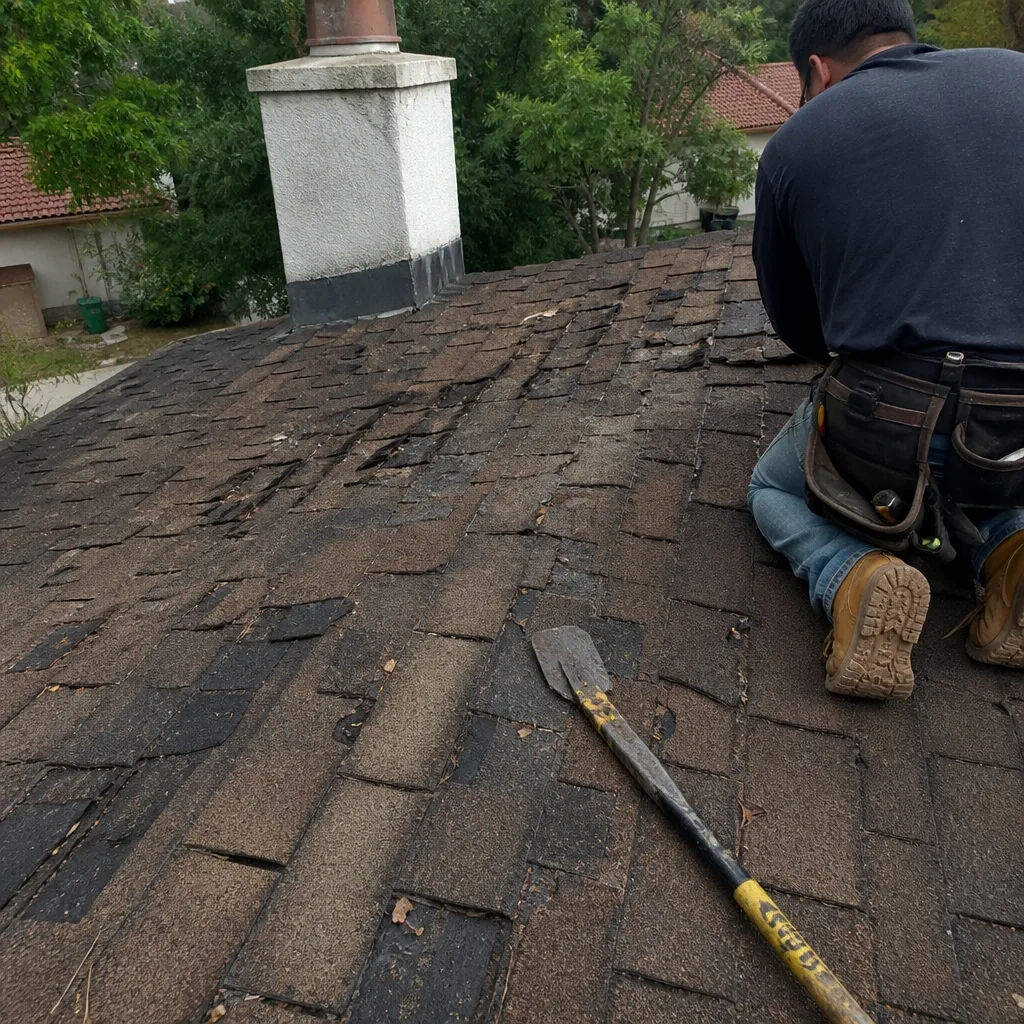 Before
 After
AfterReplacement Cost & What’s Included
In Thousand Oaks, expect to pay between $450 and $900 for a complete IKO ridge vent replacement on a one-story home with a typical 20- to 30-foot ridge line. On a two-story or larger home with dormers or multiple ridge lines, the total can reach $1,200 to $1,800 when you’re replacing cap shingles across the full run.
| Scope | Typical Installed Cost |
|---|---|
| Single ridge line, up to 30 feet, standard IKO vent | $450 – $700 |
| Ridge vent plus new cap shingles (full ridge) | $700 – $900 |
| Multiple ridge lines or two-story access | $1,200 – $1,800 |
| Vent inspection only (no replacement) | $0 with the free estimate |
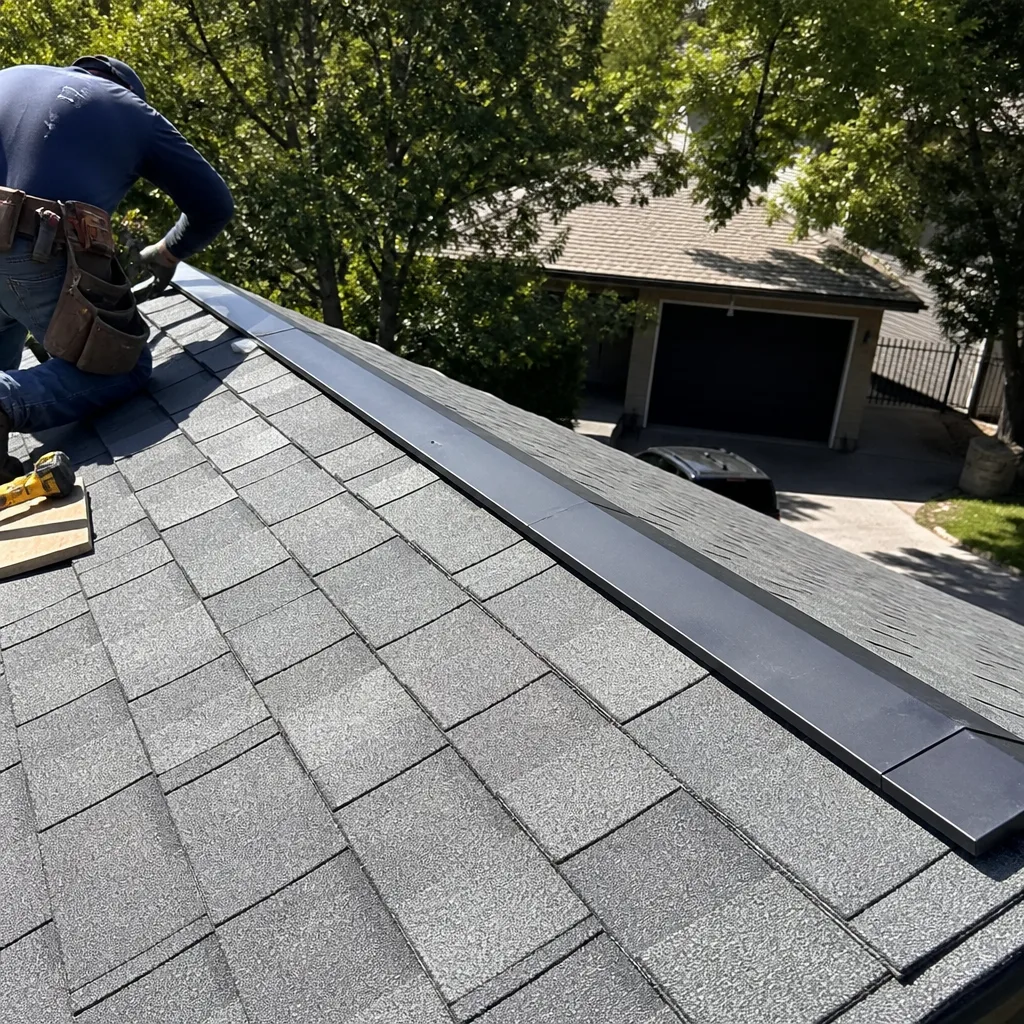
The cost spread comes down to three things: how much linear footage of vent we’re replacing, whether the cap shingles need to be replaced in the same job (they almost always do if the vent has failed), and whether we’re working on a steep roof slope that requires more careful staging and safety setup. Every quote includes removal of the old vent and any failed cap shingles, inspection of the decking at the ridge for moisture damage, installation of the IKO-compatible vent, new cap shingles as needed, and cleanup with magnetic nail sweeping. The 365-Day Done Right Promise applies to the entire job in writing. If anything’s wrong within a year, we come back and make it right at no charge.
DIY or Call Us?
Here’s my honest position on doing your own ridge vent work: there are a few things you can safely check, and a few you shouldn’t attempt. From a ladder, you can visually inspect the ridge line for missing or curling cap shingles, and you can look into the gable end or attic access to see whether the vent is blocked from underneath. That’s where I’d tell a homeowner to stop.
Replacing an IKO ridge vent requires cutting along the peak, removing and replacing cap shingles, working on the roof’s highest point with a nail gun, and making sure the vent’s free air footage matches the roof’s needs. Falls from roof peaks happen fast, and properly seating shingle-over vent under new cap shingles without leaving nail penetrations or gaps is skilled work. If you miss a nail line by an inch, you’ve just installed a leak. We’ve seen more failed ridge vents from bad previous installs than from worn-out materials. If you’d rather not gamble on that, call (805) 309-3314. A free written estimate costs you nothing, and you’ll know exactly what’s actually wrong before any money is spent.
FAQs
In Ventura County, an IKO ridge vent typically lasts 15 to 20 years, which lines up with the life of the cap shingles that cover it. The vent’s synthetic filter holds up well, but the cap shingles above it take the full brunt of the sun and the heat cycling off our hillsides, especially in neighborhoods like Lang Ranch where the afternoon heat bakes the ridge line. If your roof is 15 or more years old, plan on replacing the vent when the cap shingles go.
If the vent itself is intact and only a few cap shingles have blown loose or cracked, yes, a repair can work. We can replace individual cap shingles and resecure the vent without needing to pull the full run. But if the vent’s filter media has cracked, delaminated, or pulled away from the decking, replacement is the only fix that will actually move air and keep water out. Call (805) 309-3314 and we’ll tell you honestly which situation you’re in.
A standard single-ridge replacement on a one-story home takes about half a day, including tear-off of the old vent and cap shingles, decking inspection, new vent installation, and full cleanup. A larger home with multiple ridge lines can take a full day. We won’t leave your ridge exposed overnight if there’s rain in the forecast: we schedule around the weather when we book the job.
Yes. Our Thousand Oaks crew carries IKO-compatible shingle-over and rigid-profile ridge vent in the most common widths and thicknesses, plus universal-fit options that work for GAF, Owens Corning, and CertainTeed roofs. If your job needs a specific IKO product we don’t carry, we can have it within two to three business days and we’ll include that timing in your written estimate.
If your IKO ridge vent has failed or you suspect it’s failing, call (805) 309-3314 for a free written estimate. We’ll send you a technician’s name and photo before they arrive, and they’ll badge at the door. And as always: a roof should protect you quietly – if you’re thinking about it, something’s wrong.
Written by Grant Whitlock, Owner, Mercer Roofing Co Thousand Oaks at Mercer Roofing Co Thousand Oaks, serving Thousand Oaks and nearby areas.