
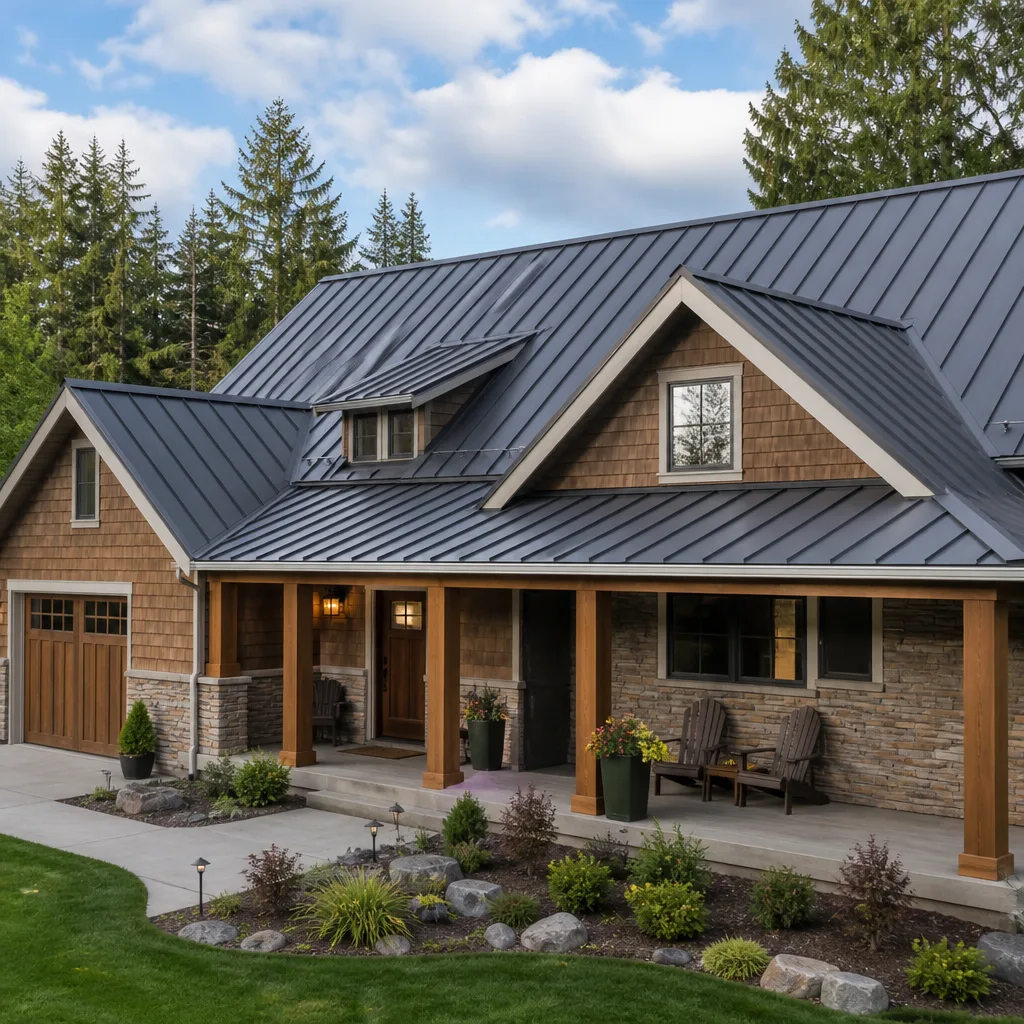
 Metal roofing
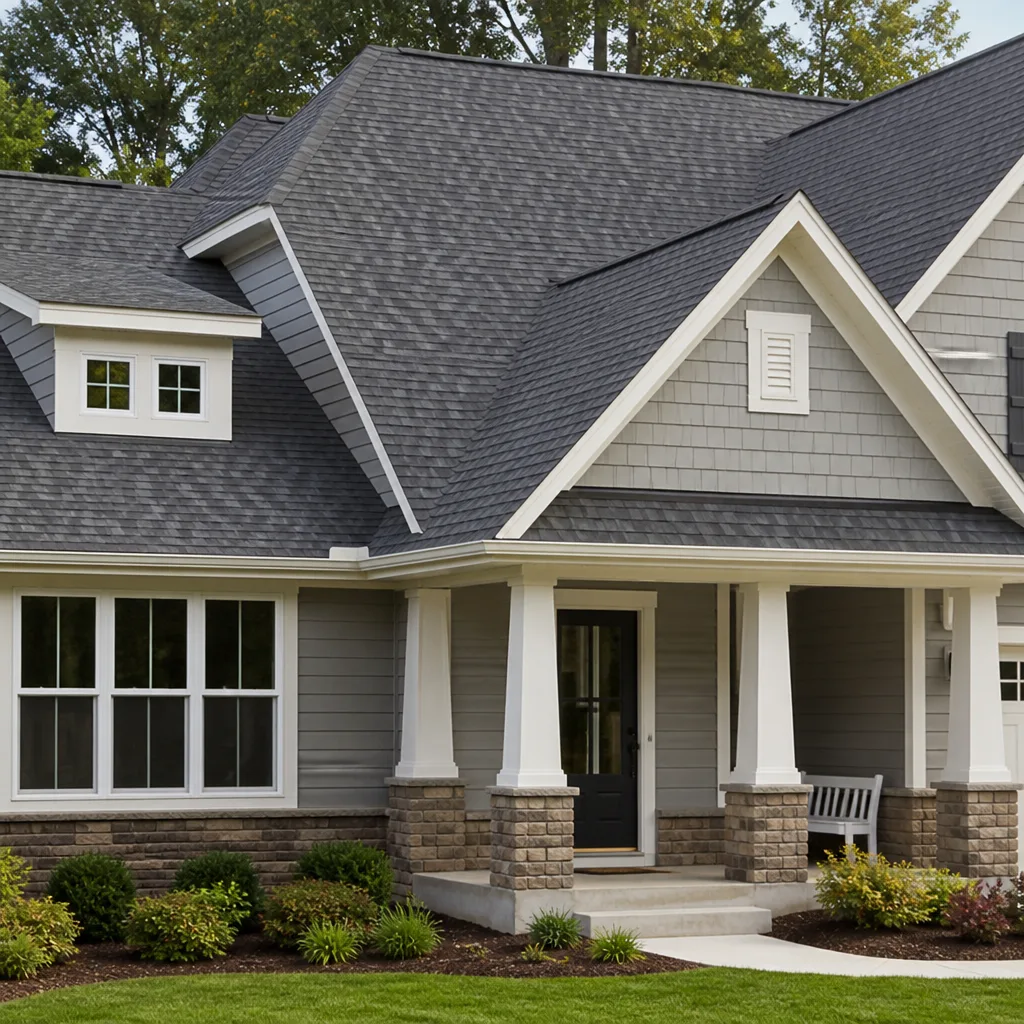 Architectural shingles
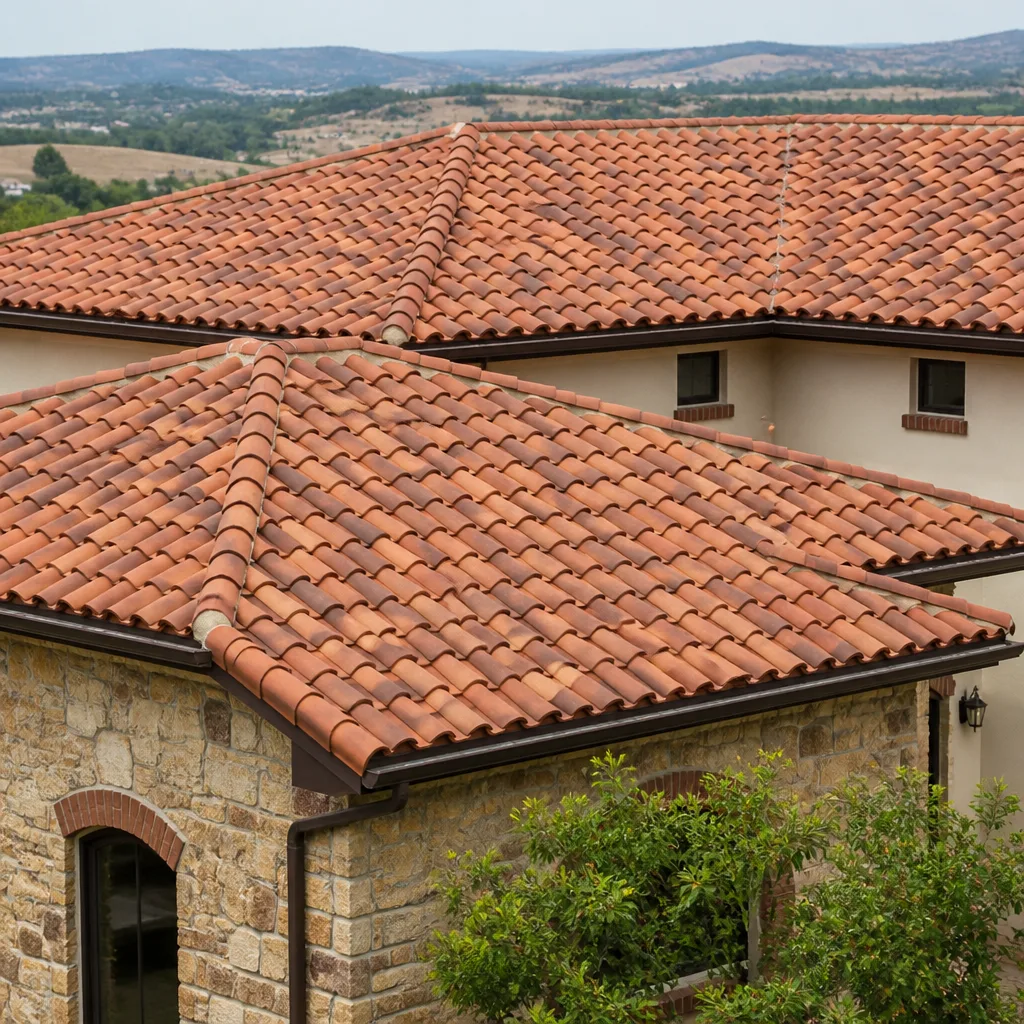 Tile roofing
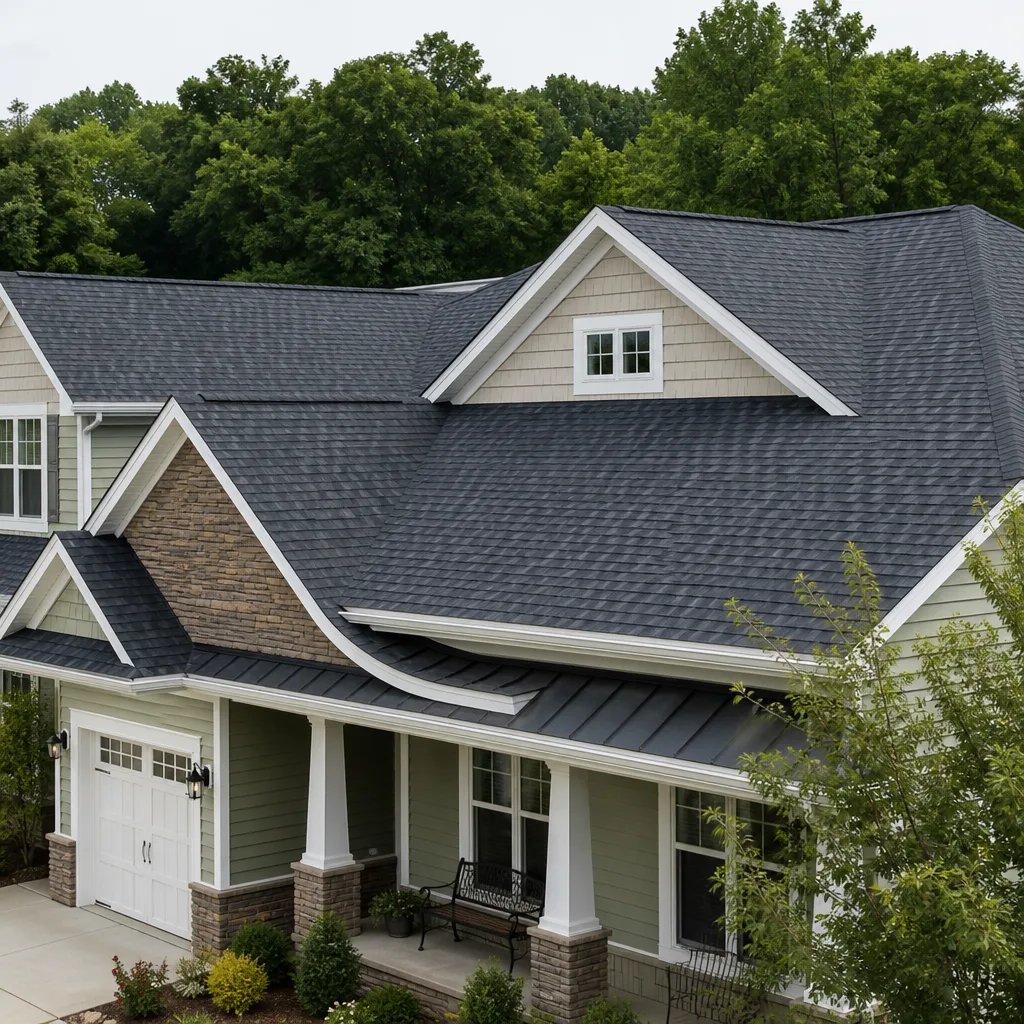 GAF
GAF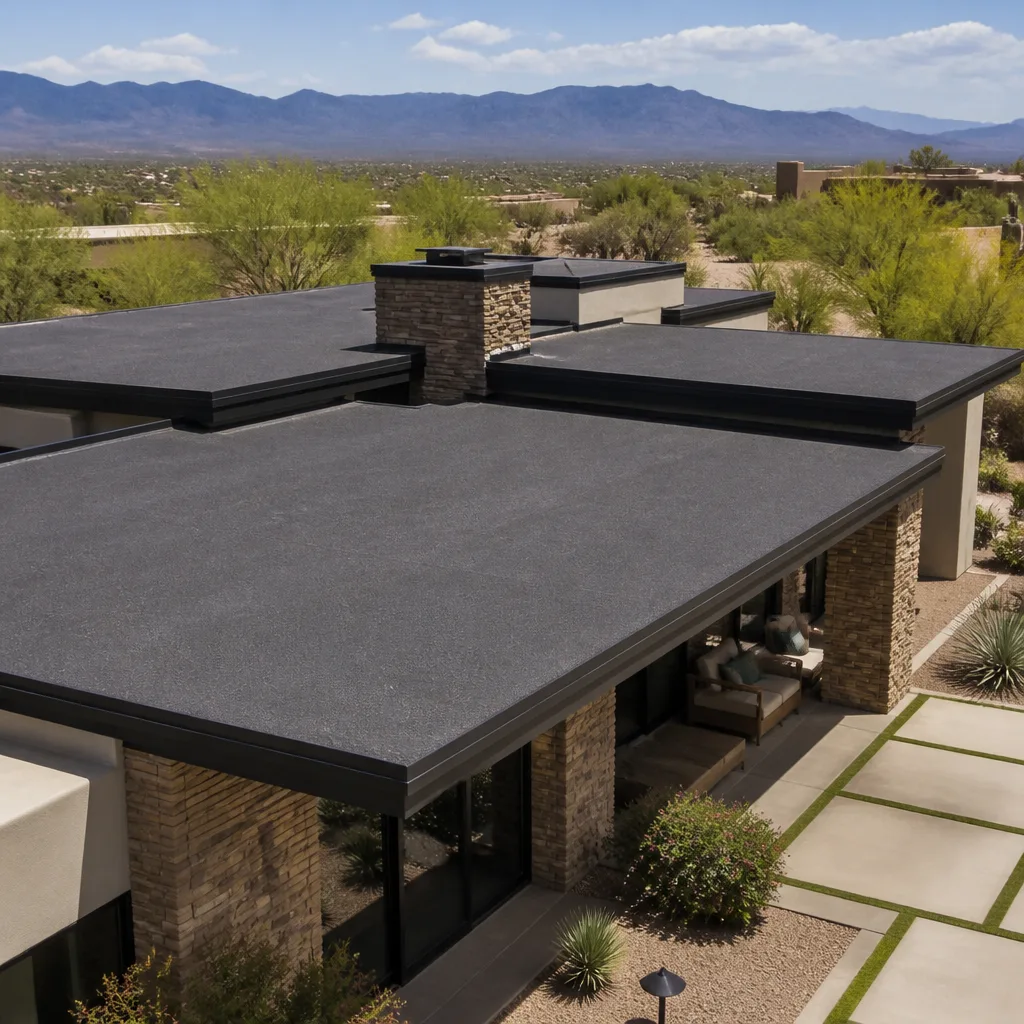 Flat & low-slope
Free roof inspection with deck photos before we talk money - GAF and Owens Corning certified installation
Fast, Reliable Roof Installation Across Topanga
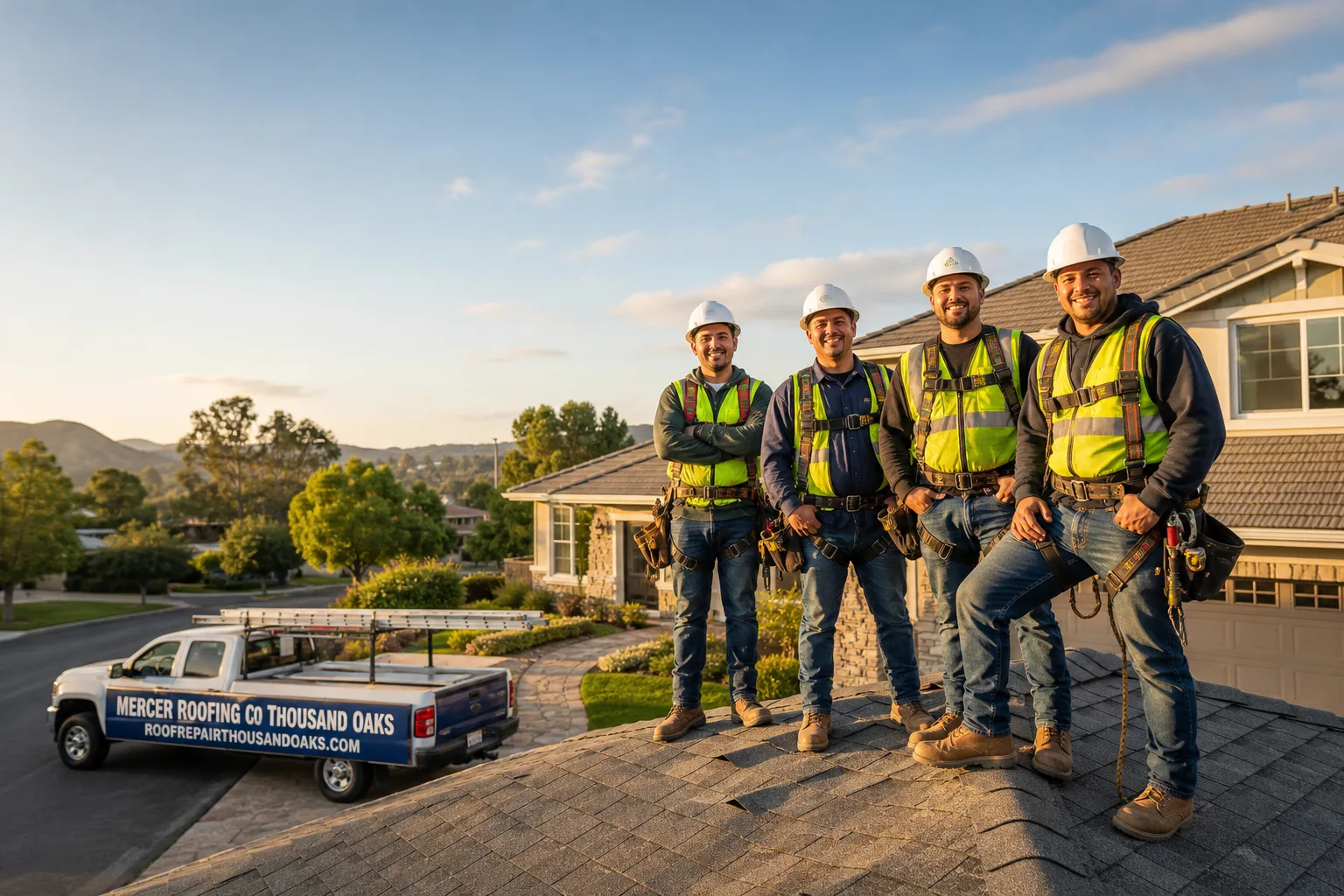
Roof installation in Topanga costs between $14,000 and $32,000 for a typical home, with coastal-spec and wildfire-rated systems at the higher end of that range. The real question isn’t just price, it’s whether the roof you’re buying will still be on the house after a decade of salt air, Santa Ana winds, and flying embers. We’re Mercer Roofing Co Thousand Oaks, and our crews work throughout Topanga regularly. Call (805) 309-3314 and we’ll send a background-checked technician whose name and photo you’ll receive before they arrive.
Why Mercer Roofing Co Thousand Oaks Is Topanga’s Preferred Roof Installation Company
Topanga homeowners deal with a roofing problem most contractors never see: the roof that fails from the nails up, not the shingles down. Salt air from the coast works into every fastener hole, every flashing seam, every unsealed penetration. We see it on homes along Old Topanga Canyon Road, in Fernwood, and up in Sylvia Park. The shingles look fine. The nails underneath don’t.
That’s why we lead with the badge at the door and the written price in your hand. Every technician is background-checked, identity-verified, and arrives in a clean uniform with photo ID. Before the visit, you’ll have their name and photo. No guessing who’s at the door. No stranger at the threshold.
Mercer Roofing was founded in 2000 and is part of the Threshold Group family of home-service companies. Each location is independently owned and operated, held to the Threshold Verified standard. For Topanga specifically, our customers consistently mention two things in reviews: the crew showed up when they said they would, and the written price never changed. That’s the standard. Not a slogan.
Dispatch and scheduling for Topanga jobs are coordinated from the brand’s Los Angeles office. Crews are local to the area and know the canyon roads, the steep driveways, and the permit requirements in the Santa Monica Mountains Coastal Zone. If you’re in Topanga and need Roof Installation, you’re not calling a stranger from across the state. You’re calling a team that works here.
Styles & brands we work with
Roof Ventilation in Topanga
Roof Ventilation in Topanga gets complicated fast because of the heat, the dry air, and the wildfire building codes. A poorly vented attic in this climate doesn’t just get hot. It bakes the decking, dries out the underlayment, and turns your roof into kindling from the inside. We see this constantly on older cabins throughout the Topanga hills where ridge vents were never installed and soffit vents were painted over.
Ventilation work typically runs $800 to $2,800 in Topanga depending on whether we’re adding a ridge vent, cutting in new soffit vents, or upgrading to a full passive system with baffles. On homes in the fire zone, we often recommend ember-resistant vent covers in addition to standard ventilation. That’s a Topanga-specific upgrade that adds about $400 to $900 but closes a known ember entry point.
The Fernwood Attic Problem
Homes in the Fernwood neighborhood, especially the older ones built into the hillside, tend to have very little attic airflow. We install continuous ridge venting with blocked soffit correction on nearly every Fernwood roof we touch. The difference in attic temperature is measurable, sometimes 25 degrees in July.
Sylvia Park and Steep-Pitch Venting
Steep-pitch cabins around Sylvia Park need ventilation that works with the pitch, not against it. We use baffled intake vents that won’t clog with oak leaves and pine needles the way unguarded soffit vents do here. On a 10/12 pitch cabin, proper ventilation extends the life of the underlayment by years.
Roof Flashing Installation in Topanga
Roof Flashing Installation in Topanga is the single most important line of defense against the salt air that eats standard galvanized metal in under a decade. We replace corroded galvanized flashing on Topanga homes every week, usually at eaves, rakes, valleys, and around chimneys. The flashing fails before the shingles do, and by the time water shows up inside, the decking behind the fascia is already rotting.
Flashing installation or replacement in Topanga typically runs $600 to $2,400 for a standard chimney, valley, or wall detail, and more on custom or steep-pitch work. We specify hot-dip galvanized or stainless steel flashing for every Topanga job, never standard electroplated. The material cost difference is modest. The lifespan difference is two to three times.
Chimney and Valley Flashing
Chimney flashing on older Topanga cabins is usually the first thing to go. Salt air plus heat cycling on the metal creates micro-cracks that open in winter rains. We rebuild chimney flashing with stainless steel and a proper cricket on the uphill side. Valleys get the same treatment: hot-dip galvanized W-valley flashing with sealed fasteners.
Replacing Corroded Drip Edge
Drip edge at eaves and rakes corrodes within 8 to 10 years in this climate, letting water run behind the fascia and soak the soffit. When we install a new roof in Topanga, we replace the drip edge as part of the job and upgrade to a marine-grade finish where the budget allows. It’s a small change that prevents a big repair.
Trusted Brands We Service in Topanga
We install and repair roofs using manufacturer-recognized shingle brands including GAF, CertainTeed, and Owens Corning, and we stock local parts for the Topanga market. For fire-zone homes, we frequently specify GAF Timberline HDZ with Class A fire ratings or CertainTeed Landmark. Both hold up to the UV intensity and sudden Santa Ana conditions Topanga throws at a roof. We don’t push a single brand. We match the material to the house, the fire zone, and the budget, and every price goes in writing before any work starts.
See the difference
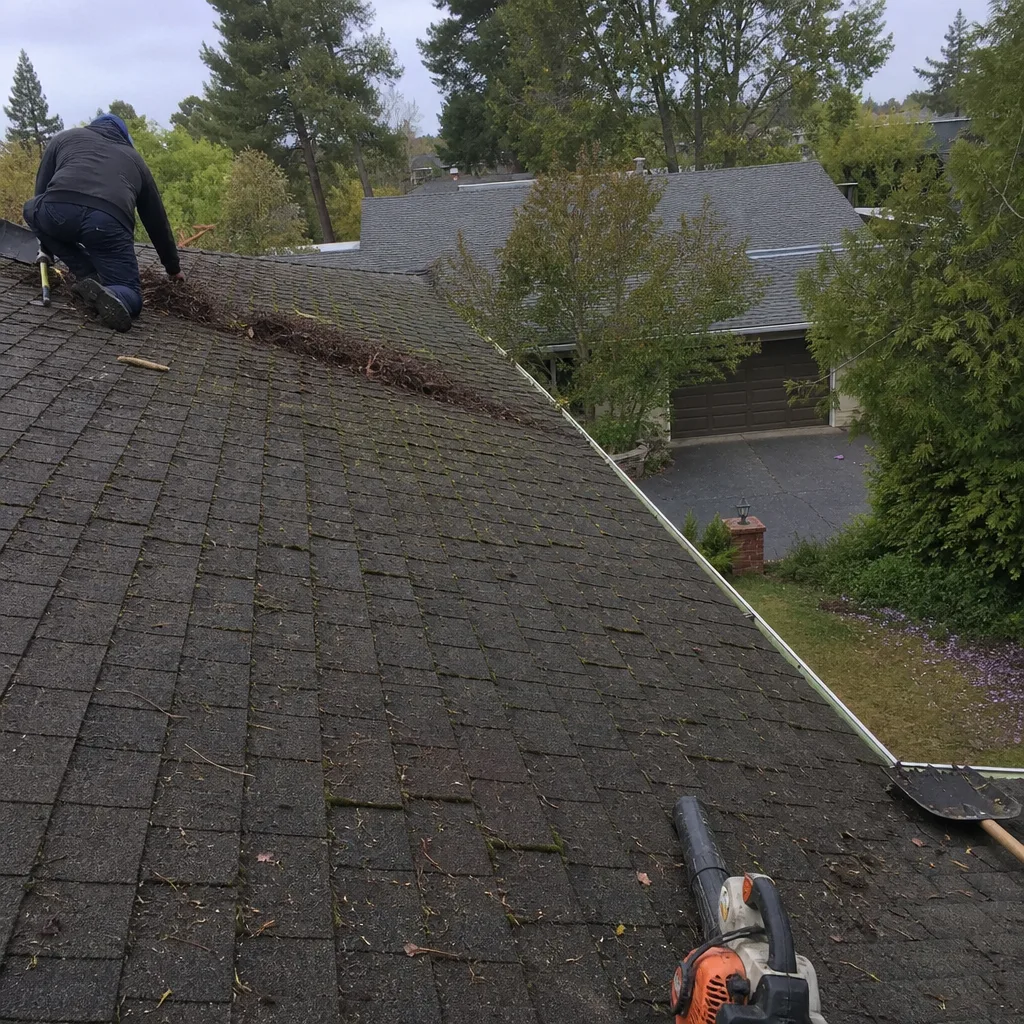 Before
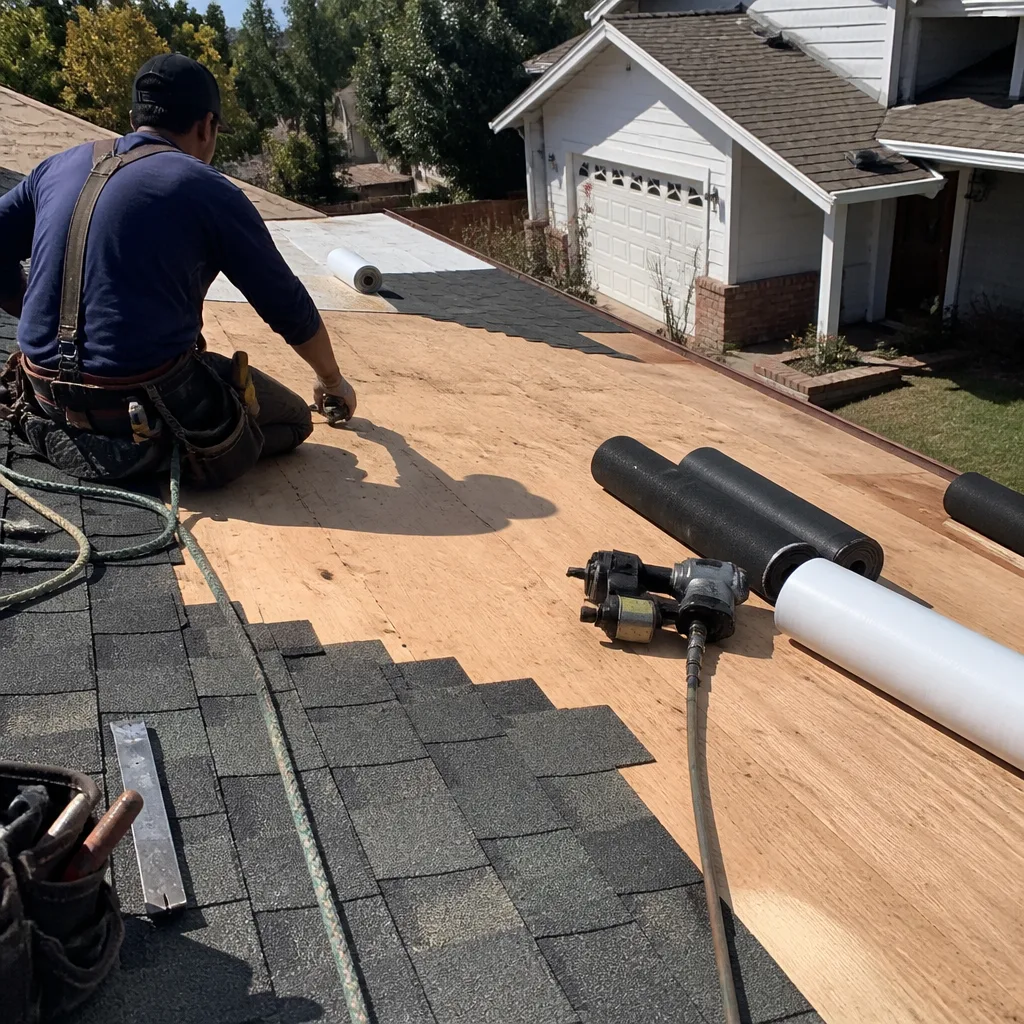 After
After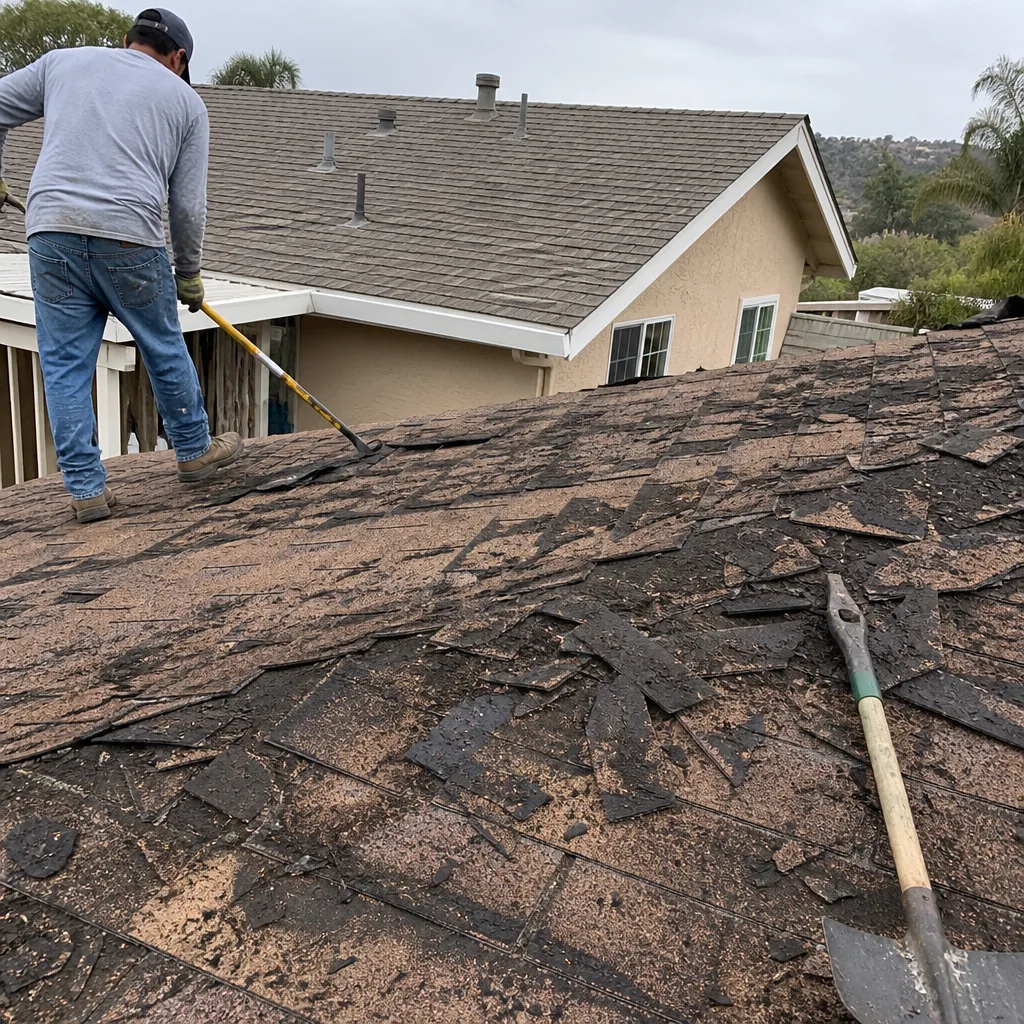 Before
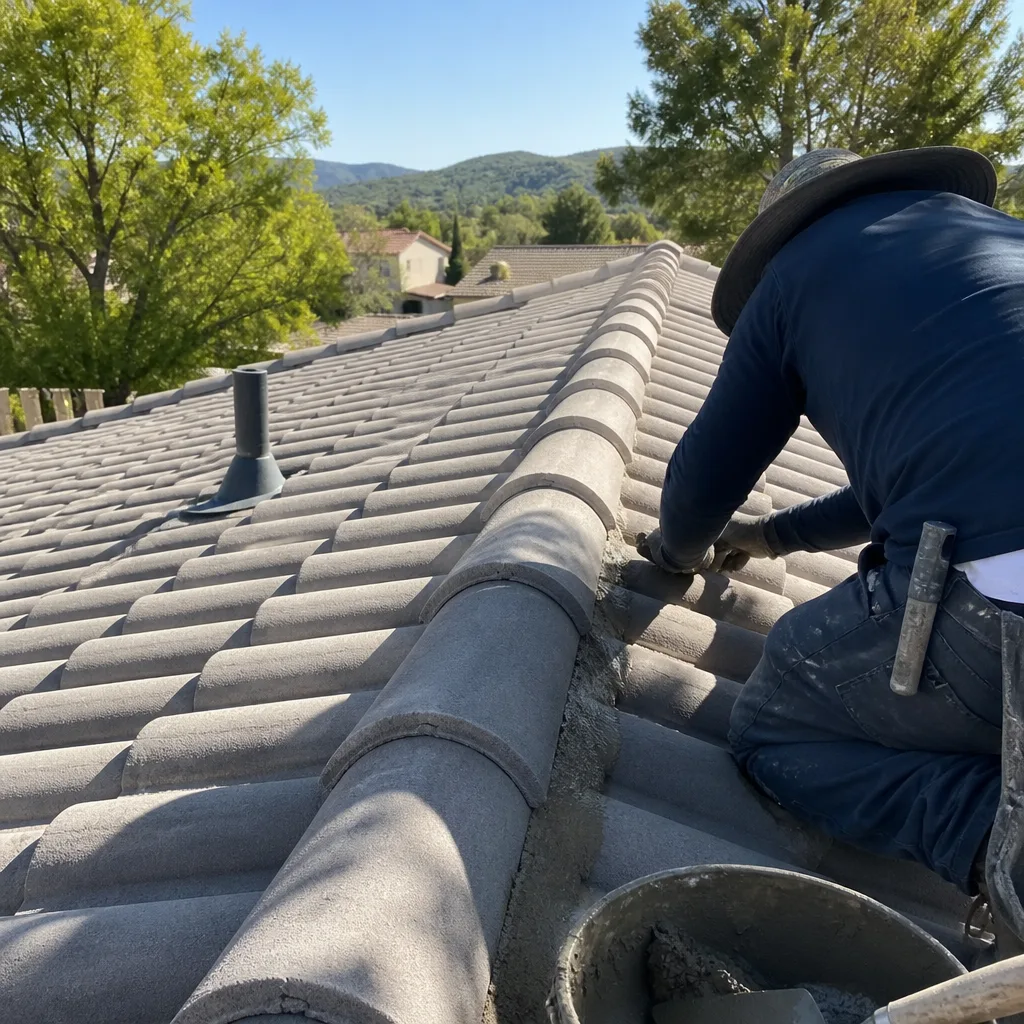 After
After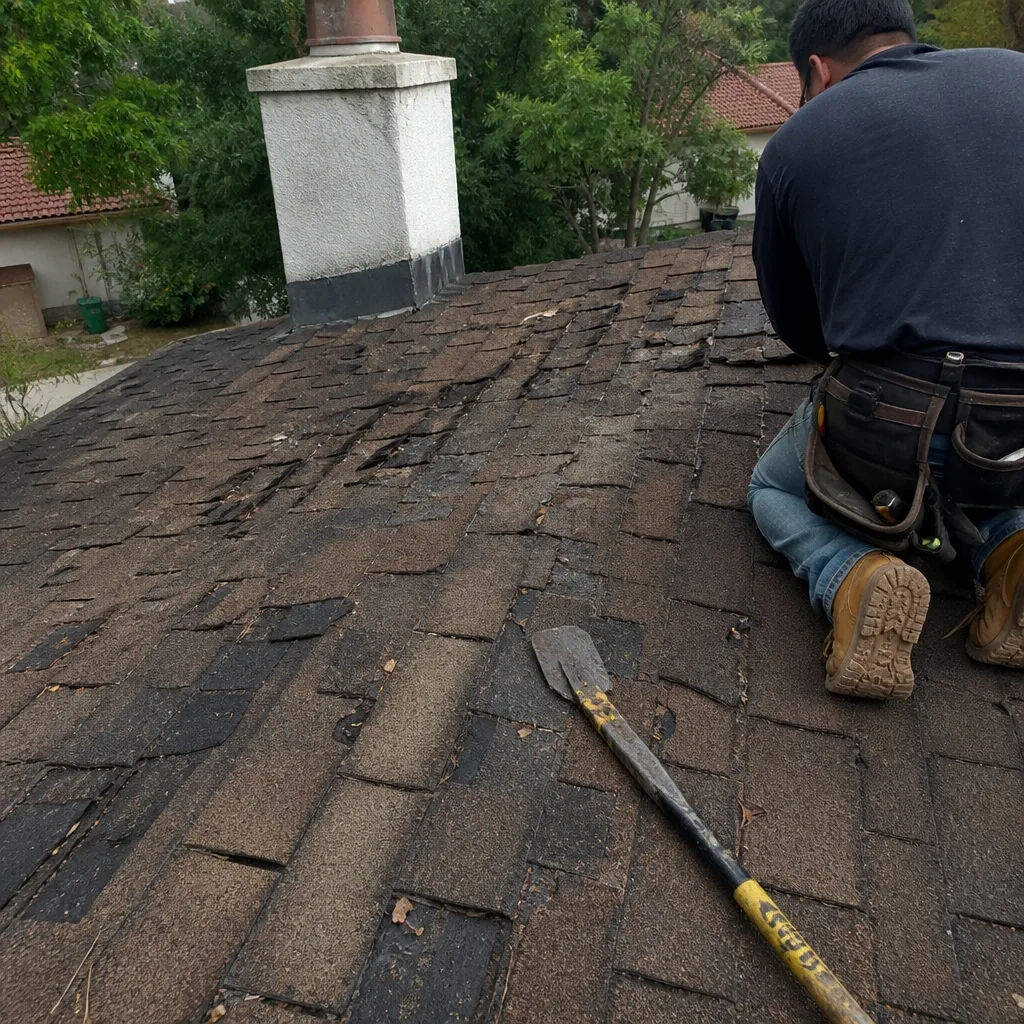 Before
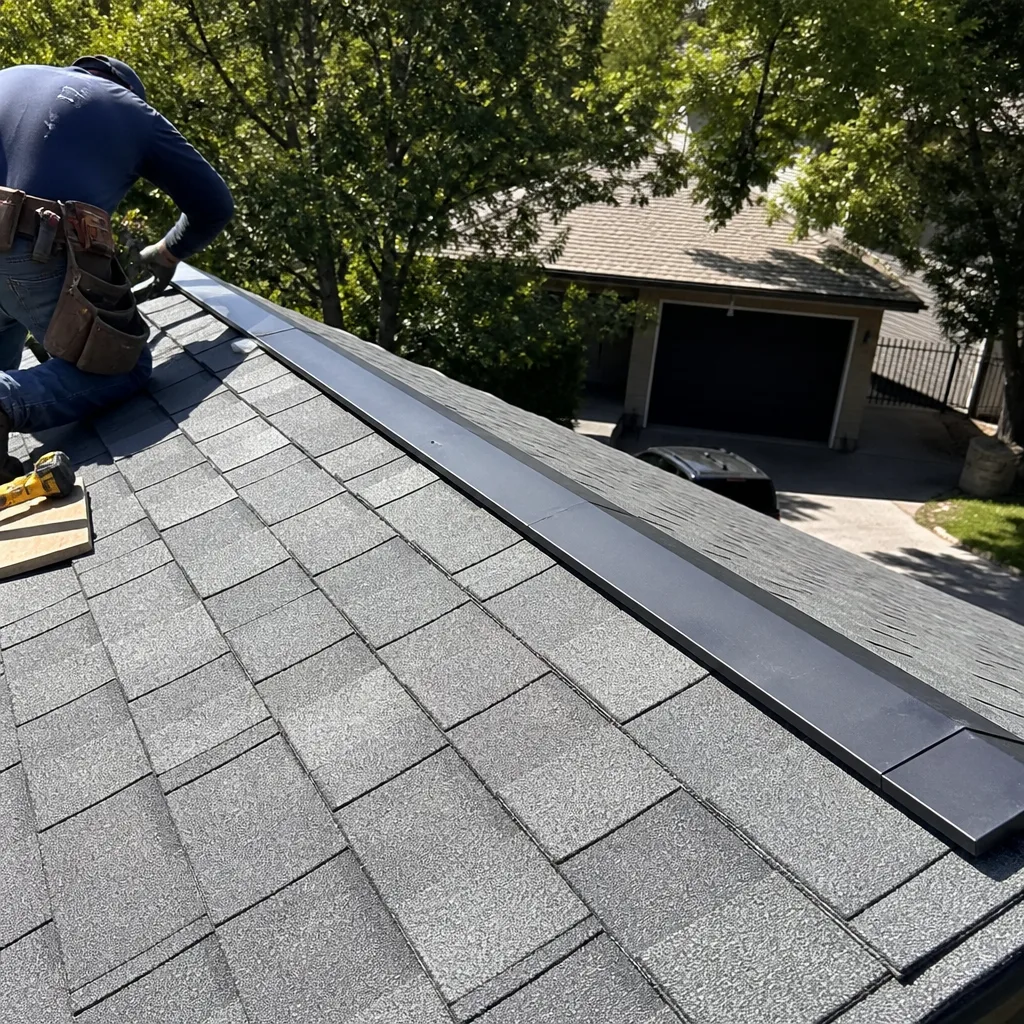 After
AfterCommon Roof Installation Problems We See in Topanga Homes
- Fastener failure from salt air: Standard electroplated nails lose their coating and rust under ridge vents and around penetrations. When the Santa Anas hit, the shingles let go because the nails are no longer holding. We specify stainless steel ring-shank nails on every Topanga install.
- Corroded flashing at eaves and valleys: Galvanized flashing lasts 8 to 10 years in Topanga, not the 20-plus years inland. Water gets behind the fascia and soaks the soffit before anyone sees a leak. We replace it with hot-dip galvanized or stainless on every job.
- Wood-shake tear-offs hiding rotten decking: Many pre-1990 Topanga homes still have wood shake roofs. When we tear them off, the decking underneath is often dry-crumbled from UV and heat, with nail heads that no longer bite. The decking replacement is a real cost that inland estimates don’t include.
- Unsealed penetrations near overhanging trees: Topanga’s oaks and pines drop debris that sits on the roof and holds moisture against pipe boots and vent flashing. We seal every penetration with marine-grade sealant and install debris-guarded vents so the next storm doesn’t find a way in.
Pricing for Roof Installation in Topanga, CA
A full Roof Installation in Topanga runs $14,000 to $32,000 for most homes. Smaller cabins on flat lots start around $9,500. A coastal-spec system with stainless fasteners, hot-dip flashing, Class A underlayment, and upgraded decking adds $3,000 to $7,000 over the inland spec. That’s the gap between a roof that lasts 15 years here and one that lasts 25 or more. The cheap spec costs more within a decade, because you’ll be doing the tear-off twice.
Call (805) 309-3314 for a written line-item estimate. Before any work begins, you’ll have the full price on paper. No change orders, no surprises on the invoice, and the 365-Day Done Right Promise on every install.
We Also Serve Cities Near Topanga
Our crews work regularly in Calabasas, Canoga Park, West Hills, and Agoura Hills. If you’re on the edge of Topanga near the Calabasas line or over toward Agoura, you’re still in our service area. The coastal-spec conversation applies differently in each town, which is why we price by the specific house, not the ZIP code.
Serving Topanga, CA - Our Local Coverage Area
We’re based in the Topanga area and know this community well. Use the map below to see our service coverage - if you’re nearby, we can almost certainly help.
FAQs About Roof Installation in Topanga
Coastal-spec fasteners cost 15 to 25 percent more because they’re stainless steel or hot-dip galvanized rather than standard electroplated, and Topanga’s salt air makes them effectively required if you want the roof to last past a decade. Electroplated nails rust under ridge vents and around penetrations within 8 to 10 years here. We include stainless ring-shank nails on every Topanga installation as standard, not as an upgrade, because we’d rather not be back on your roof in ten years pulling off shingles that let go in a Santa Ana. Call (805) 309-3314 for an exact quote with the coastal spec included.
Wildfire risk means we install Class A fire-rated assemblies with a synthetic underlayment rated for ember resistance and high wind, plus 5/8-inch CDX decking where the old decking has dried out. In Topanga’s fire zone, the underlayment isn’t just a moisture barrier. It’s the layer that stops embers from reaching the decking if the shingles are compromised. The building code in the Santa Monica Mountains Coastal Zone requires Class A, but many older Topanga homes predate that code, so the tear-off often includes decking and underlayment upgrades that pass inspection the first time.
Coastal-spec flashing uses hot-dip galvanized or stainless steel with sealed fastener holes and marine-grade sealant at every penetration, where inland flashing is typically standard galvanized with exposed fasteners. In Topanga, standard galvanized flashing corrodes at eaves and chimneys within 8 to 10 years. The coastal package costs more up front because the metal is heavier and the sealant work is more meticulous. Over the life of the roof, it’s cheaper than tearing off shingles to replace flashing that should have been done right the first time.
Steep pitches and overhanging trees add labor cost because the crew needs more safety rigging and more hand-nailing in tight spots, and the material spec goes up because the underlayment and fasteners have to handle sliding debris and trapped moisture. On a steep-pitch cabin off Old Topanga Canyon Road, we pulled cedar shakes that were cupping and splitting from decades of salt air and UV, and the decking underneath crumbled at the nail heads. We replaced it with 5/8-inch CDX, laid a synthetic underlayment rated for 130 mph, and used stainless steel ring-shank nails with hot-dip galvanized flashing at every valley and penetration. That’s the coastal-spec package the old roof never had, and it’s what a Topanga cabin needs.
A standard-spec roof in Topanga lasts 15 to 18 years before fasteners and flashing start failing, while the coastal-spec system with stainless fasteners and hot-dip flashing lasts 25 to 30 years. The difference is entirely in the parts you don’t see: the nails, the flashing, the sealant at penetrations. Salt air attacks those parts first. We put the coastal spec on every Topanga roof we install, and we back the work with the 365-Day Done Right Promise: if it’s not right within a year, Mercer makes it right. Call (805) 309-3314 for a free estimate with the coastal package priced out line by line.
Written by Grant Whitlock, Owner at Mercer Roofing Co Thousand Oaks, serving Topanga since 2000.