
Last updated October 17, 2026
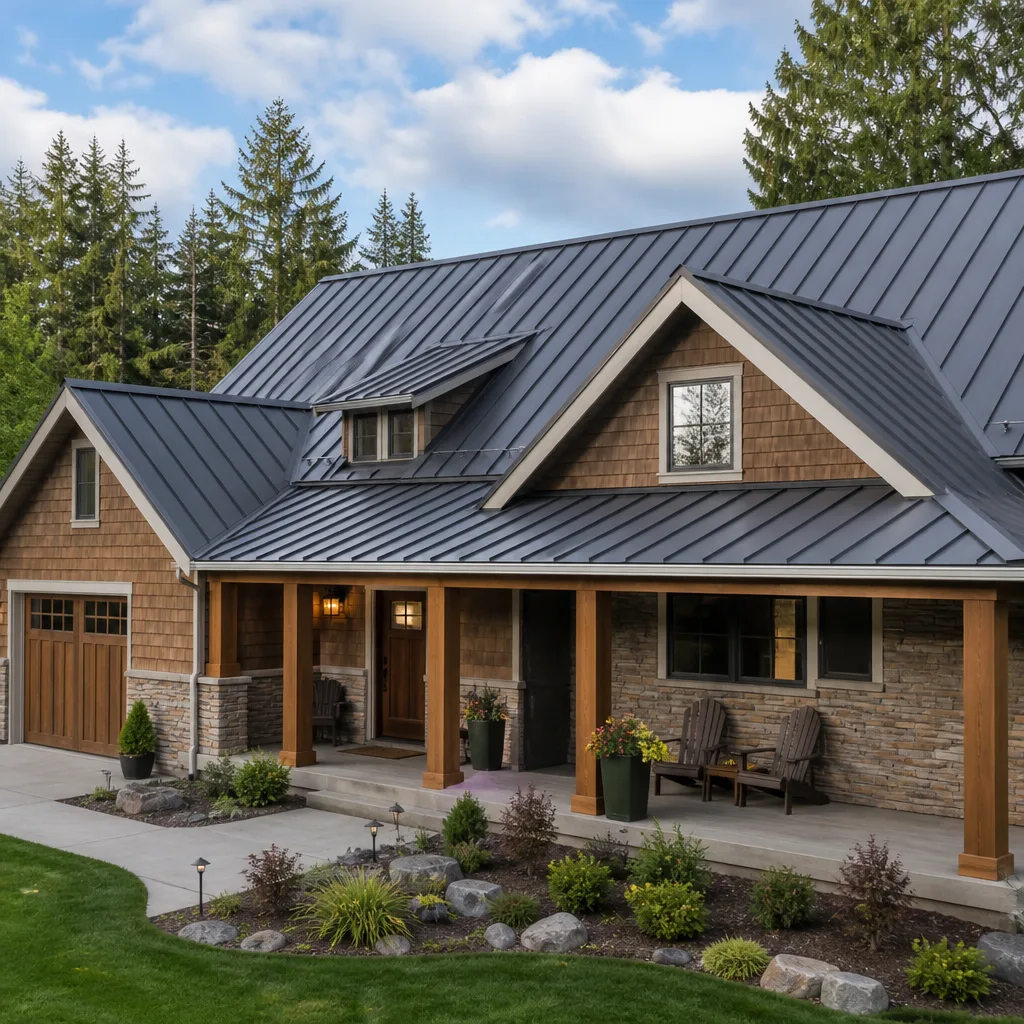 Metal roofing
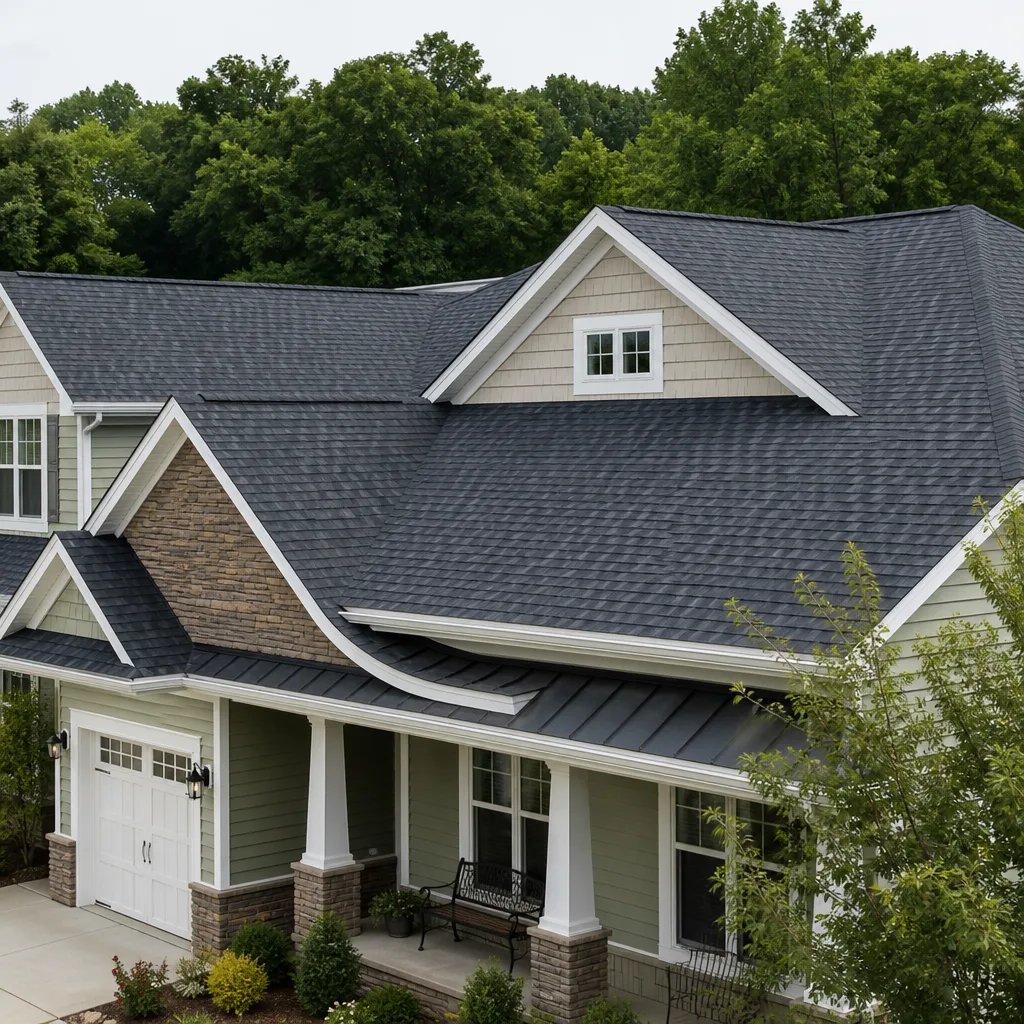
 Architectural shingles
 Tile roofing
 GAF
GAF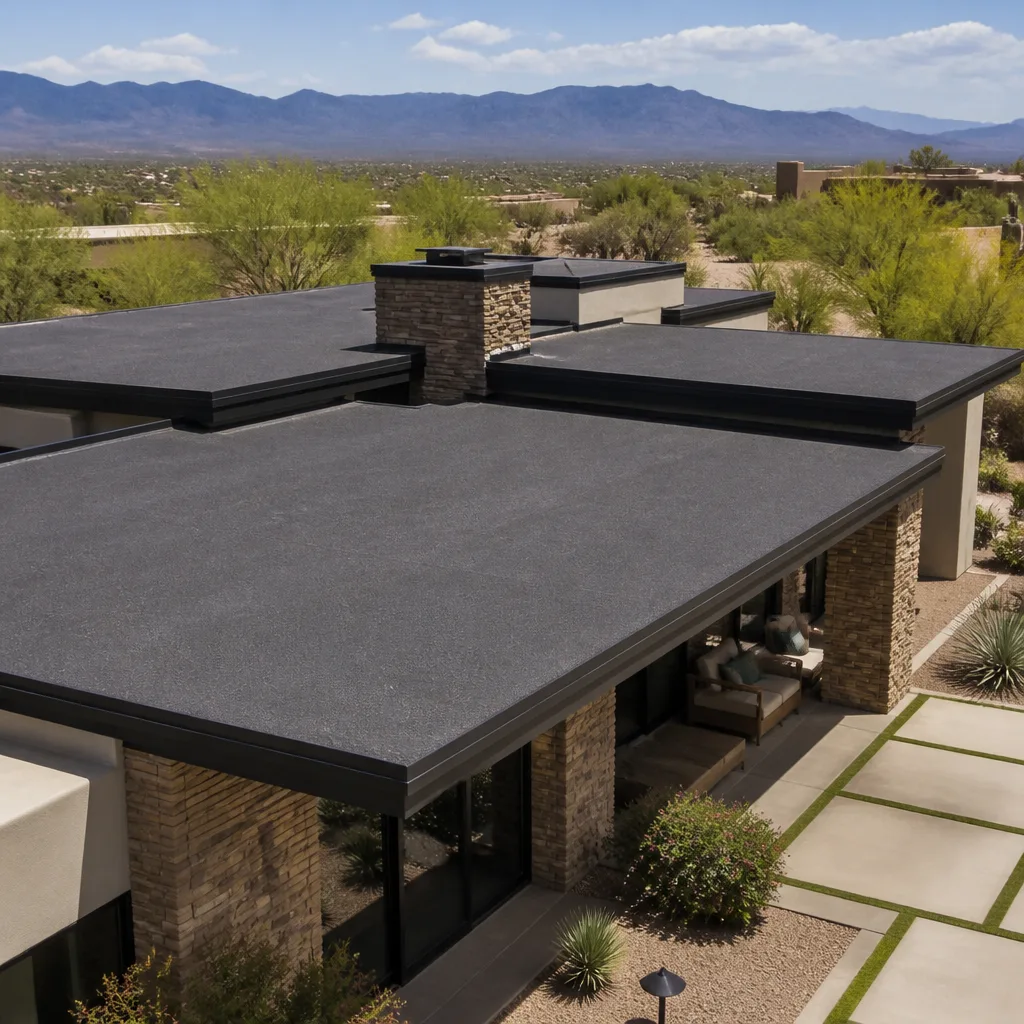 Flat & low-slope
Free roof inspection with deck photos before we talk money - GAF and Owens Corning certified installation
How to Hire a Roofing Contractor in Thousand Oaks: A Step-by-Step Guide
California’s CSLB license lookup takes 30 seconds and most homeowners skip it entirely. But even homeowners who do check the license often hand access to their property to a subcontractor they’ve never vetted, because the contractor they hired outsourced the job without saying so. In Thousand Oaks, where door-to-door solicitation spikes after every major wind event, knowing exactly who is on your roof matters as much as what they’re putting on it. This guide walks through the hiring process step by step, with the identity and accountability checks that protect you before, during, and after the job. For more guides & resources, visit our blog.
Quick Answer
To hire a roofing contractor in Thousand Oaks, verify their California CSLB license and active workers’ comp coverage, confirm in writing that named employees (not undisclosed subcontractors) will do the work, get a written estimate that itemizes permits, disposal, and flashing scope, and structure payment so final payment follows city inspection sign-off. A legitimate contractor will put all of this in writing before work starts. If they resist any of these steps, that’s your signal to keep looking.
Styles & brands we work with
Table of Contents
- Step 1: Verify the CSLB License and Workers’ Comp Coverage
- Step 2: Ask the Subcontracting Question Before You Sign
- Step 3: Get a Written Estimate That Passes the California Test
- Step 4: Know the Red Flags of Post-Wind-Event Solicitation in Thousand Oaks
- Step 5: Structure a Payment Schedule That Protects You
- Step 6: Verify Who Shows Up at the Door
- Step 7: Confirm the Warranty and Follow-Up Terms in Writing
- Common Mistakes to Avoid
- When to Call a Professional
- Frequently Asked Questions
Step 1: Verify the CSLB License and Workers’ Comp Coverage
Every roofing contractor working in Thousand Oaks must hold an active C-39 roofing license from the California Contractors State License Board (CSLB). The license lookup at cslb.ca.gov is free and takes less than a minute. Here’s exactly what to check and what each item tells you.
The Five-Point CSLB Check
- License status. The license must say “Active.” If it says “Expired,” “Suspended,” or “Revoked,” the contractor cannot legally work in California. Walk away.
- Classification. The license must be C-39 (Roofing) or a General B classification. A painter with a C-33 license cannot pull a roofing permit in Thousand Oaks.
- Workers’ compensation coverage. Look for a “Workers’ Comp” line on the record. It must say “Active” or “Exempt” (exempt applies only to contractors with no employees, which is rare for a roofing crew). If a roofer has employees and no workers’ comp coverage, you can be held liable if a worker is injured on your property.
- Bond amount. California requires a $25,000 contractor’s bond. The CSLB record shows the bond’s status and issuing company. A lapsed bond means the license is technically invalid even if the status line says Active.
- Business name and address. The name on the license must match the name on any contract you sign. A contractor asking you to pay a different business name than the one licensed is a red flag. Also confirm the address is a real business location, not a P.O. box.
A valid record shows all five items clean. A lapsed record might show an Active status but a cancelled bond, or a workers’ comp line that reads “Pending.” Those are the records that cause problems six months after the job when a leak appears and you discover the contractor has no bond to claim against.
Thousand Oaks-Specific Licensing Notes
The City of Thousand Oaks requires a roofing permit for any re-roof involving structural changes, and most full replacements qualify. A licensed contractor can pull this permit; you as the homeowner can also pull it, but that shifts liability for compliance onto you. Let the contractor pull it and confirm the permit number in writing before work begins. For more on what repairs and replacements involve, see our guide to Roof Repair in Thousand Oaks.
Step 2: Ask the Subcontracting Question Before You Sign
The single most important question most Thousand Oaks homeowners never ask: “Will your own employees do this work, and can I have their names in writing?”
Here’s why it matters. A contractor can have a spotless CSLB record, glowing reviews, and a professional estimate, then hand the entire job to a subcontracting crew they met at a supply yard. That crew has no relationship with you, no accountability to the brand you hired, and in many cases no workers’ comp coverage of their own. If a subcontracted worker is injured on your Thousand Oaks property and the subcontractor lacks coverage, the claim can fall back on your homeowner’s insurance.
Ask the question directly. Then ask for the answer in writing, as part of the contract or as an addendum. A legitimate roofing company will name the crew lead and confirm that all workers are W-2 employees or named subcontractors with their own verified coverage. If the contractor hedges, says “we use different crews depending on the schedule,” or refuses to put names in writing, you now know the answer.
At Mercer Roofing Co Thousand Oaks, every technician who arrives at your door is background-checked, identity-verified, and dispatched under the Threshold Verified standard. We send each technician’s name and photo before the visit so you know exactly who to expect at the door. No anonymous crews, no surprise subcontractors.
Step 3: Get a Written Estimate That Passes the California Test
California law requires home improvement contracts over $500 to be in writing and to include specific items. But meeting the legal minimum doesn’t mean the estimate protects you. A legitimate written estimate for a Thousand Oaks roofing job should clear three bars:
What a Legitimate Written Estimate Contains
- Full scope of work. Specific materials (brand and product line, not just “shingles”), square footage or number of squares, all roof penetrations to be re-flashed, ventilation details, and a line item for tear-off if applicable. Vague scope language like “repair roof as needed” is an invitation for change orders.
- Line-item pricing. Materials, labor, permit fees, disposal fees, and any miscellaneous costs should appear as separate numbers. A lump-sum bid with no breakdown makes it impossible to compare bids or spot what’s missing.
- Payment schedule. The deposit percentage, progress payment milestones, and final payment terms should be stated in dollars, not percentages only. See Step 5 for the California deposit limit.
- Permit and inspection responsibility. Who pulls the permit, who schedules the inspection, and what happens if the inspection fails. A bid that says “permits not included” or suggests skipping the permit should be eliminated immediately.
- Warranty terms. Manufacturer warranty (materials) and workmanship warranty (labor) as separate items, each with a duration stated in months or years.
The Three Omissions That Signal a Lowball Bid
The most common lowball roofing bids in Thousand Oaks work by omitting three costs that always come up, then charging for them as “unforeseen” change orders once the roof is torn off and you have no leverage:
- Disposal fee. Tearing off an old roof in Thousand Oaks generates 2 to 4 tons of debris. Dump fees and hauling run $400 to $900 depending on roof size and landfill charges. A bid that omits disposal is underpriced by design.
- Permit fee. Thousand Oaks permit costs for a re-roof typically range from $300 to $800 depending on project valuation. A bid that says “permit not included” isn’t saving you money; it’s moving the cost to a change order.
- Flashing scope. Flashing is the metal at roof edges, valleys, and penetrations. Cheap bids often specify “replace shingles only” and leave existing flashing, which is almost always corroded or outdated. Re-flashing a typical Thousand Oaks home adds $500 to $1,500. A bid that doesn’t mention flashing isn’t a complete bid.
At Mercer Roofing, we write the price before any work starts, every time. That’s not a conditional offer or a “we’ll see what we find” caveat. The written price includes the full scope we’ve identified, and we explain exactly what that scope covers before you sign. No surprises on the invoice.
Step 4: Know the Red Flags of Post-Wind-Event Solicitation in Thousand Oaks
Thousand Oaks gets hit hard by Santa Ana winds, and every major wind event brings a wave of door-to-door roofing solicitors through neighborhoods like Newbury Park, Wildwood, and Lynn Ranch. Some are legitimate. Many are not. Here are the specific red flags to recognize.
Door-to-Door Bids After a Wind Event
A roofer who knocks on your door after a storm and says they “noticed damage” from the street is working from a script. Legitimate contractors don’t scout for work by walking neighborhoods after wind events; they respond to calls. The door-to-door roofer’s goal is to sign a contract while the storm is still on your mind and before you’ve had time to compare bids or check the CSLB.
Pressure to Sign Same-Day
Any roofer who says the price is “only good today” or that they “have a crew in the area tomorrow” is creating artificial urgency. A legitimate contractor in Thousand Oaks will leave you with a written estimate that stands for at least 30 days. There is no scenario where a reputable roofer needs your signature today for a job they’ll schedule weeks out. If the price expires tonight, the price was the hook.
Offers to Waive the Permit
This is the most dangerous offer a solicitor can make. “We can skip the permit and save you the fee” saves you $300 to $800 and voids any protections the permit process provides: independent inspection of the work, a public record of the project, and a code compliance backstop. A roofer offering to waive the permit is telling you they don’t want the city inspecting their work. In Thousand Oaks, building officials inspect re-roofs for nailing patterns, underlayment, and flashing details. Skipping that inspection leaves you with no evidence the work meets code. Learn more in our guide to Roofing Permits, Codes & Inspections in CA: What You Need to Know.
For more on what a proper repair or replacement process looks like in Thousand Oaks, see Roofing Company in Thousand Oaks.
Step 5: Structure a Payment Schedule That Protects You
California law limits the deposit a contractor can collect before work begins: for home improvement contracts, the down payment cannot exceed 10% of the total contract price or $1,000, whichever is less. This is not a guideline; it’s state law. A roofer asking for 30% or 50% upfront is either ignorant of the law or counting on you being ignorant of it.
Beyond the deposit, structure payments around completed milestones, not days on the calendar. A sensible schedule looks like this:
- Deposit: 10% or $1,000 maximum, paid at signing. This holds your spot and covers permit application processing.
- Materials delivery: 30-40% when materials are physically delivered to your Thousand Oaks property and verified. You should see shingles, underlayment, and flashing on the ground before releasing this payment.
- Progress payment: 20-30% when the underlayment is installed and the roof is dried in, before shingles go on. At this point the roof is weather-protected and the remaining work is visible and verifiable.
- Final payment: The balance after the city inspection passes and you receive a written sign-off. Never make final payment based on the contractor saying “we’re done.” Make final payment based on the City of Thousand Oaks inspector saying the work complies.
The final payment is your leverage. Once it’s paid, a contractor’s incentive to return for punch-list items drops to zero. Hold the final payment until the inspector signs off and you’ve walked the roof (from the ground or photos) to confirm the scope matches the contract.
Step 6: Verify Who Shows Up at the Door
You’ve checked the CSLB license, confirmed employees in writing, and signed a detailed contract. The last gap in standard hiring advice is the simplest: who actually arrives at your home?
Every year, homeowners in Thousand Oaks open their door to someone who says they’re “with the roofing company” and turns out to be a day laborer, an independent subcontractor, or in the worst cases, someone with no connection to the contractor at all. The person at the door is the point where all your vetting either holds or collapses.
Ask these questions when the crew arrives:
- Can I see photo ID? A legitimate technician carries a company photo badge or government ID and will show it without hesitation.
- Does your name match the written crew list? The names in your contract addendum are the names that should be at your door. If the crew is different, call the office before letting anyone on the roof.
- Are you an employee of the company I hired? Ask directly. If the answer is “I work for a subcontractor,” stop and call the office. Subcontractors must be disclosed in advance, not discovered at the door.
This is the standard we built Mercer Roofing around. Every technician’s name and photo are sent to you before the visit. Every technician arrives in a clean, marked uniform with a photo ID badge. They’re background-checked, identity-verified, and held to the Threshold Verified standard that each independently owned location is contractually bound to. The person at your door is the person we said would be there.
Step 7: Confirm the Warranty and Follow-Up Terms in Writing
A roofing warranty only matters if it’s specific enough to enforce. Here’s what a written warranty should state, in plain words:
Workmanship Warranty
This covers the contractor’s labor. We’ve seen warranties in Thousand Oaks ranging from one year to ten. The key question is what happens when something fails. Does the contractor return for free? For how long? Does the warranty cover the full scope or only specific items?
Mercer provides a written guarantee on every repair, included with every job. If a repair fails within 365 days, we make it right and the second visit is free. That’s the 365-Day Done Right Promise, in writing, on every job. No conditional language, no “we’ll take a look at it” ambiguity.
Manufacturer Warranty
Shingle brands like IKO, Atlas, Tamko, and Boral offer different warranty tiers depending on whether the full system (shingles, underlayment, ridge caps, and ventilation) is installed together. A system warranty typically lasts 50 years or lifetime and covers materials, but only if installation meets manufacturer specs. Ask the contractor whether your warranty is a materials-only warranty or a system warranty, and get the manufacturer’s warranty registration confirmation in writing. If the contractor says “the warranty is automatic,” push back. Registration with the manufacturer is your proof of coverage.
For more on what a full installation involves, see Roof Installation in Thousand Oaks.
Common Mistakes to Avoid
- Skipping the CSLB check because the roofer “seemed nice.” The license check is the one step that takes 60 seconds and catches the most serious risks. A suspended license means no bond, no workers’ comp verification, and no legal recourse through the CSLB.
- Paying a deposit over the California legal maximum. The law caps deposits at 10% or $1,000, whichever is less. A contractor asking for more is either breaking the law or planning to use your money to fund another job.
- Signing a bid with no line items. A single-number bid with no breakdown for materials, labor, permit, and disposal is designed to prevent comparison and to justify change orders later. In Thousand Oaks, where re-roof scopes vary from townhome to hillside estate, a lump-sum bid hides more than it reveals.
- Accepting a door-to-door bid after a Santa Ana wind event. The most rushed decisions happen in the week after a wind storm. Take the estimate, check the CSLB record, call references, and give yourself a week. Legitimate Thousand Oaks roofers have plenty of work; they don’t need a same-day signature.
- Ignoring the subcontracting question. If you don’t ask, the contractor won’t volunteer. A crew that appears in unmarked trucks with no uniforms is often a subcontracted crew. The time to discover this is before signing, not after the work starts.
- Paying final balance before the city inspection passes. Once the inspector signs off, the work is verified as code-compliant. Before that, you’re taking the contractor’s word. Hold the final payment until the City of Thousand Oaks confirms compliance.
- Assuming the manufacturer warranty is automatic. Some warranties require dealer registration within a deadline. Others become void if the system isn’t installed to manufacturer spec. Get the registration confirmation in writing.
When to Call a Professional
Call a professional roofer when you see missing shingles after wind, water stains on your ceiling, granules collecting in your gutters, or any daylight visible through the attic decking. These are signs the roof’s watershedding system has failed and the problem will compound with each rain. A missing flashing detail now becomes a rotted fascia board and a ceiling repair later. If you’re unsure whether your roof needs repair or replacement, a professional inspection gives you a written scope and a price you can plan around. Mercer Roofing Co Thousand Oaks offers free estimates in Thousand Oaks, call (805) 309-3314 and a live person answers, 24/7, not a voicemail.
Frequently Asked Questions
A full roof replacement in Thousand Oaks typically ranges from $12,000 to $28,000 for an average single-family home, depending on roof size, pitch, shingle brand, and whether the existing roof is removed. See our Roofing Cost Breakdown: The Thousand Oaks Homeowner’s Reference for 2026 for detailed pricing. The range breaks down roughly as follows:
- Tear-off and disposal: $2,500 to $5,000 depending on roof size and layers.
- Underlayment and decking repair: $1,500 to $3,500 if decking needs patching.
- Shingle installation (architectural, mid-range brand like Atlas or Tamko): $6,500 to $15,000 depending on square footage.
- Flashing and ventilation upgrades: $1,000 to $3,000 if existing flashing is outdated.
- Permit fees (City of Thousand Oaks): $300 to $800 depending on valuation.
These are averages based on work we’ve priced across Thousand Oaks, from starter homes in Newbury Park to larger properties in the Conejo Valley hills. Call (805) 309-3314 for an exact quote in writing before any work starts.
Go to cslb.ca.gov, click “Check a License,” and enter the contractor’s name or license number. The record must show an Active C-39 Roofing classification, active workers’ compensation coverage (or a valid exemption), and a current bond. A valid record confirms the contractor can legally work in Thousand Oaks. If any of these items is lapsed or missing, do not sign a contract.
A legitimate written estimate should not change unless the contractor discovers conditions that couldn’t be seen before the tear-off, such as rotted decking or improper ventilation. Those changes should be documented with photos and a written change order before proceeding. At Mercer, we write the price before any work starts. If we discover an issue mid-job, we show you the problem, explain the fix, and get your written approval on the new price before touching it. No surprises on the invoice.
Yes, we pull all required City of Thousand Oaks permits and schedule inspections. The permit creates a public record of the work and provides independent inspection by city officials. A roofer who suggests skipping the permit is saving you a few hundred dollars and taking away your only independent check on the installation quality. We don’t offer that trade.
A typical single-family roof replacement in Thousand Oaks takes 2 to 5 working days, depending on roof size, pitch, and the number of layers being torn off. Larger homes with steep pitches in hillside neighborhoods may take up to a week. The schedule should be stated in your contract, and weather delays for rain or high wind are reasonable and normal, especially during Santa Ana season.
The people whose names and photos you received before the visit. At Mercer Roofing, every technician is background-checked, identity-verified, and dispatched under the Threshold Verified standard, required of every independently owned location. The technician at your door arrives in a clean, marked uniform with a photo ID badge and matches the name and photo we sent you. No anonymous crews, no undisclosed subcontractors.
The Bottom Line
Hiring a roofing contractor in Thousand Oaks comes down to verifying four things: the CSLB record, the subcontracting arrangement, the written estimate’s completeness, and the person at your door. Download our Roof Repair Maintenance Checklist for Thousand Oaks Homeowners to track each step. The CSLB check catches legal problems. The subcontracting question catches accountability problems. The line-item estimate catches pricing problems. The door check catches the failure point every other guide skips. Get all four in writing, structure payment to hold leverage through the final inspection, and you’ll have a roof installed by people you verified, at a price you approved, with a warranty you can enforce. That’s the whole job, and it’s entirely within your control.
Written by Grant Whitlock, Owner at Mercer Roofing Co Thousand Oaks, serving Thousand Oaks since 2000.
Ready to talk about your roof? Call (805) 309-3314 for a free estimate. A live person answers, written price before any work starts, and a 365-Day Done Right Promise on every job.
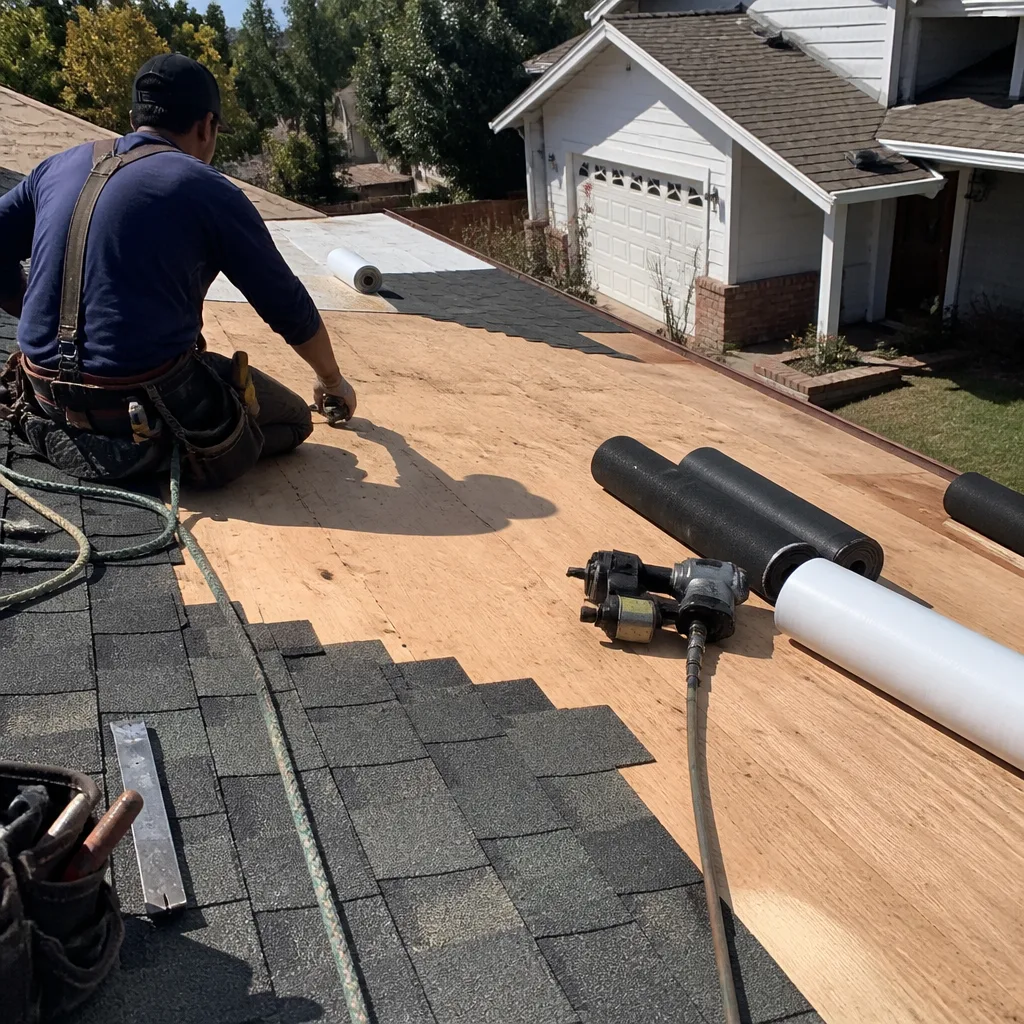
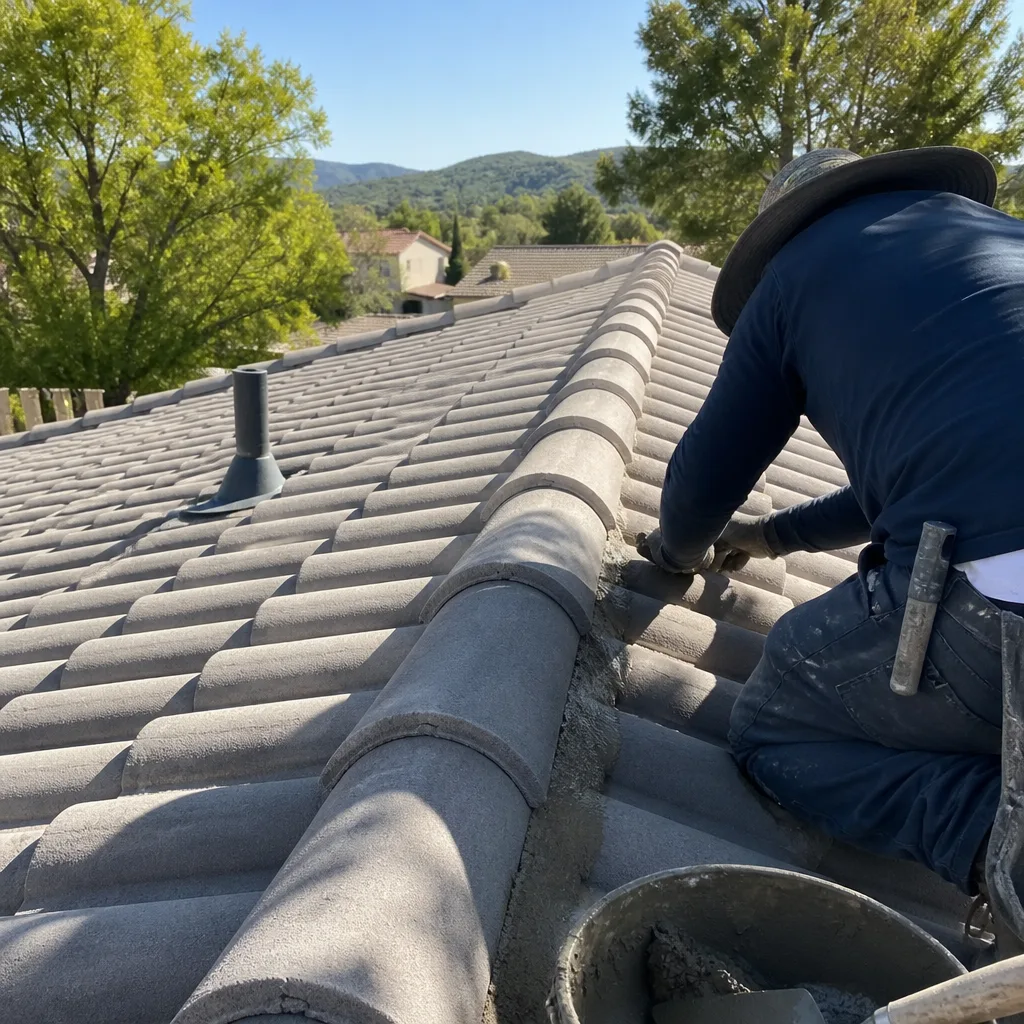
See the difference
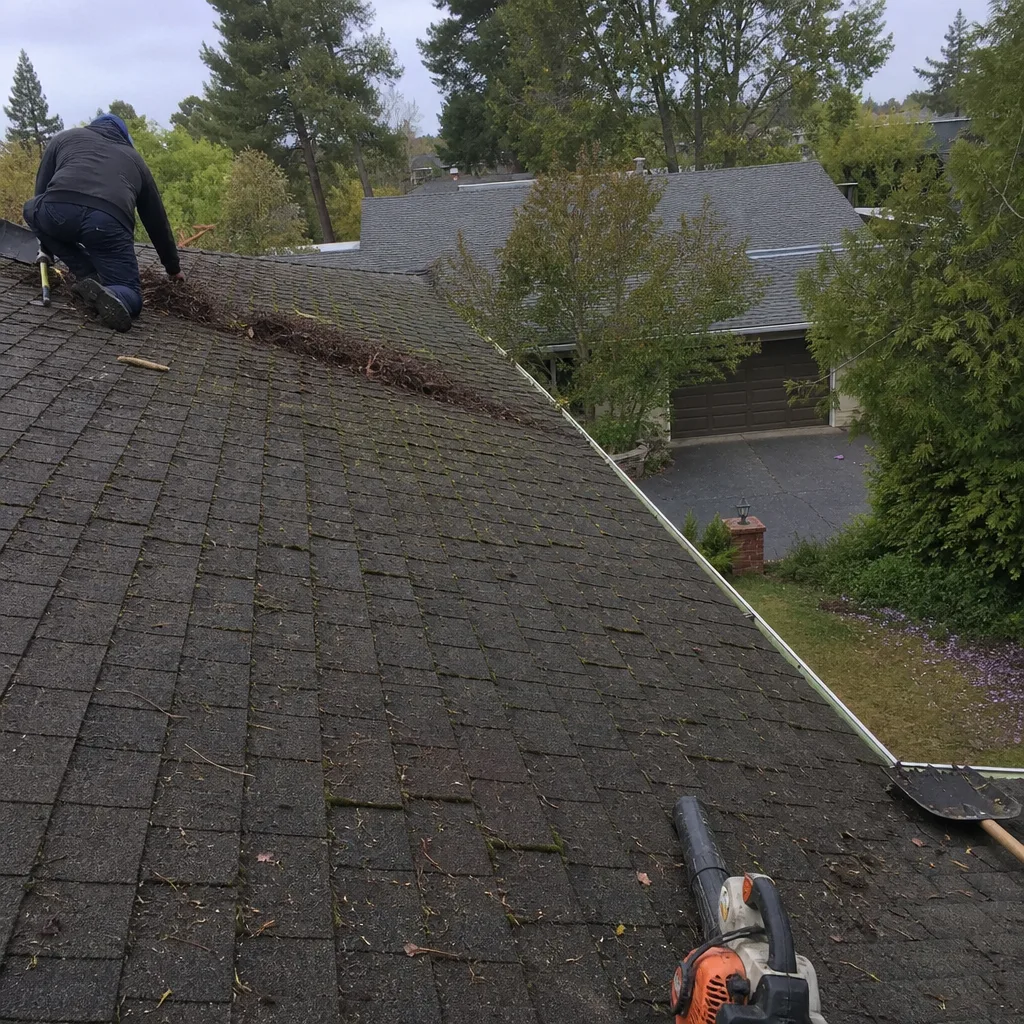 Before
 After
After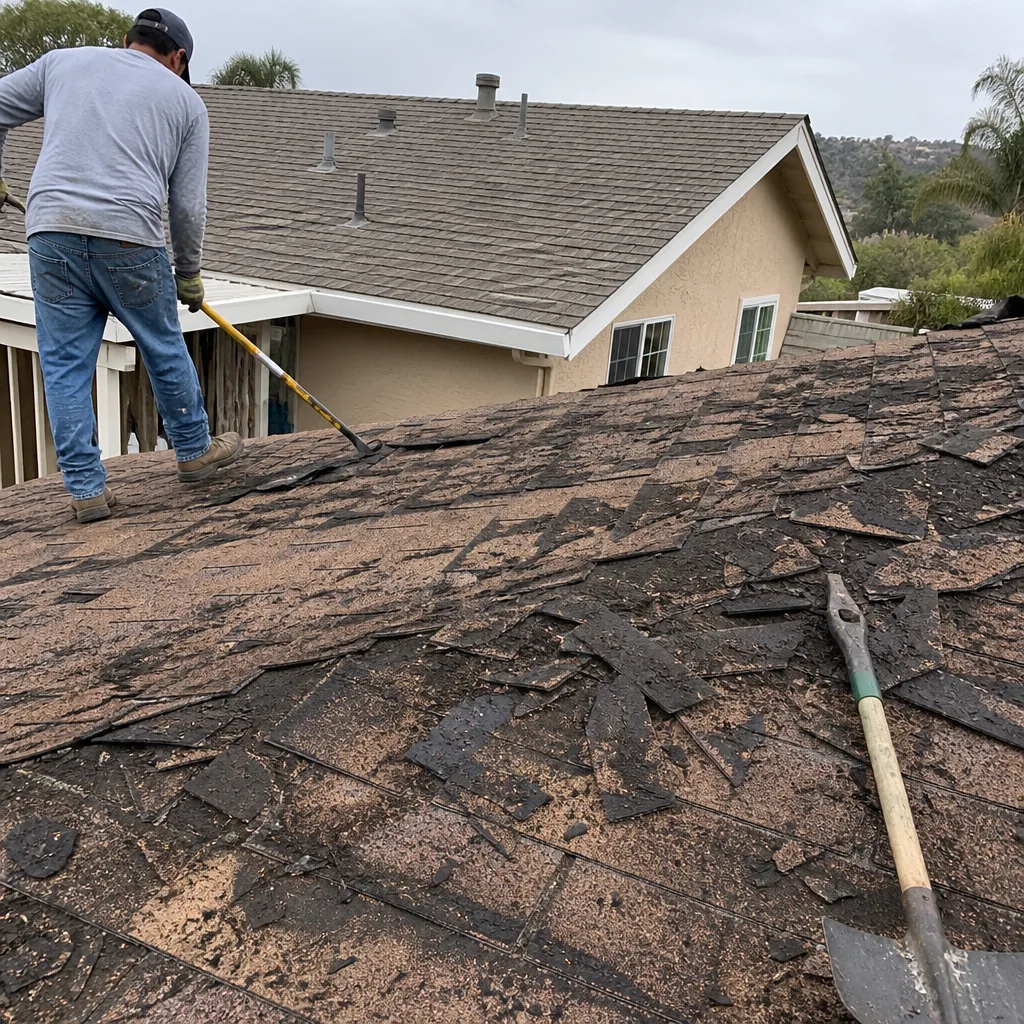 Before
 After
After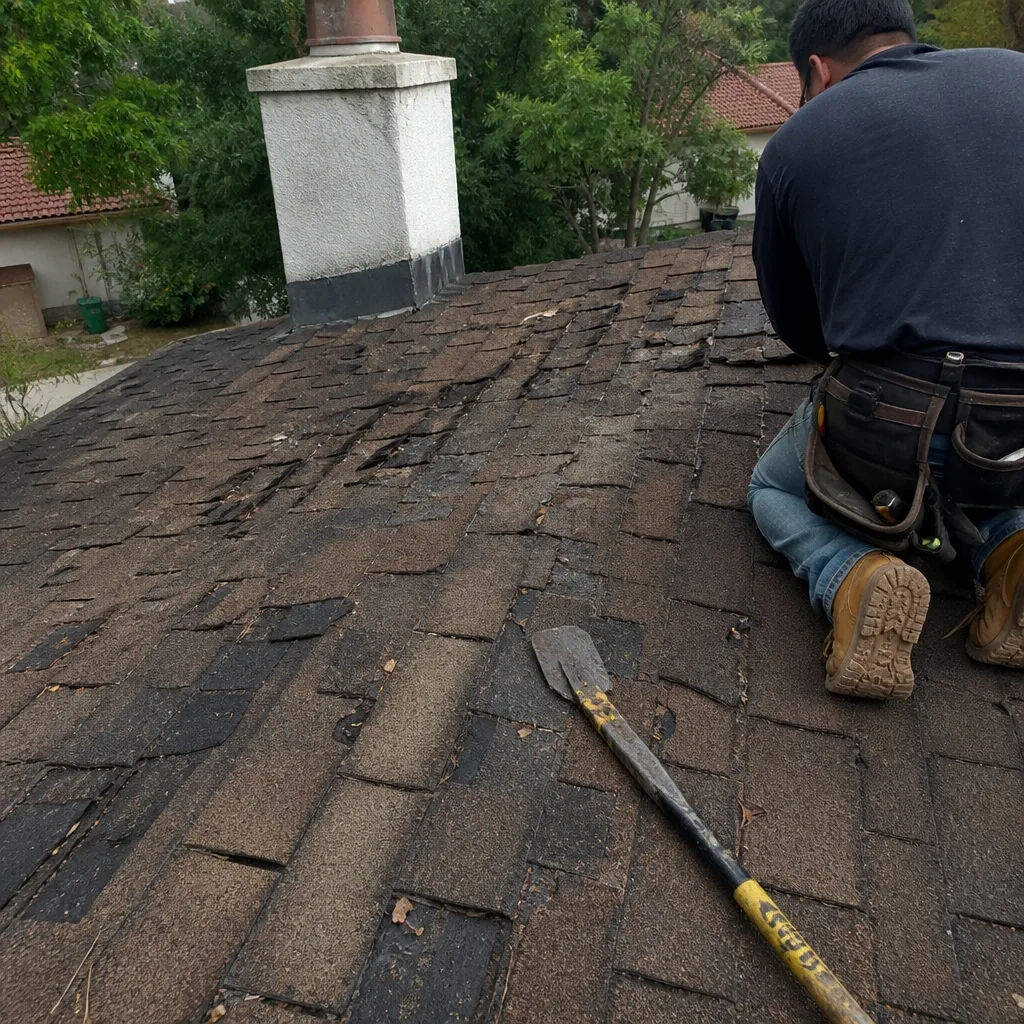 Before
 After
After