
Last updated October 17, 2026
 Metal roofing
 Architectural shingles
 Tile roofing
 GAF
GAF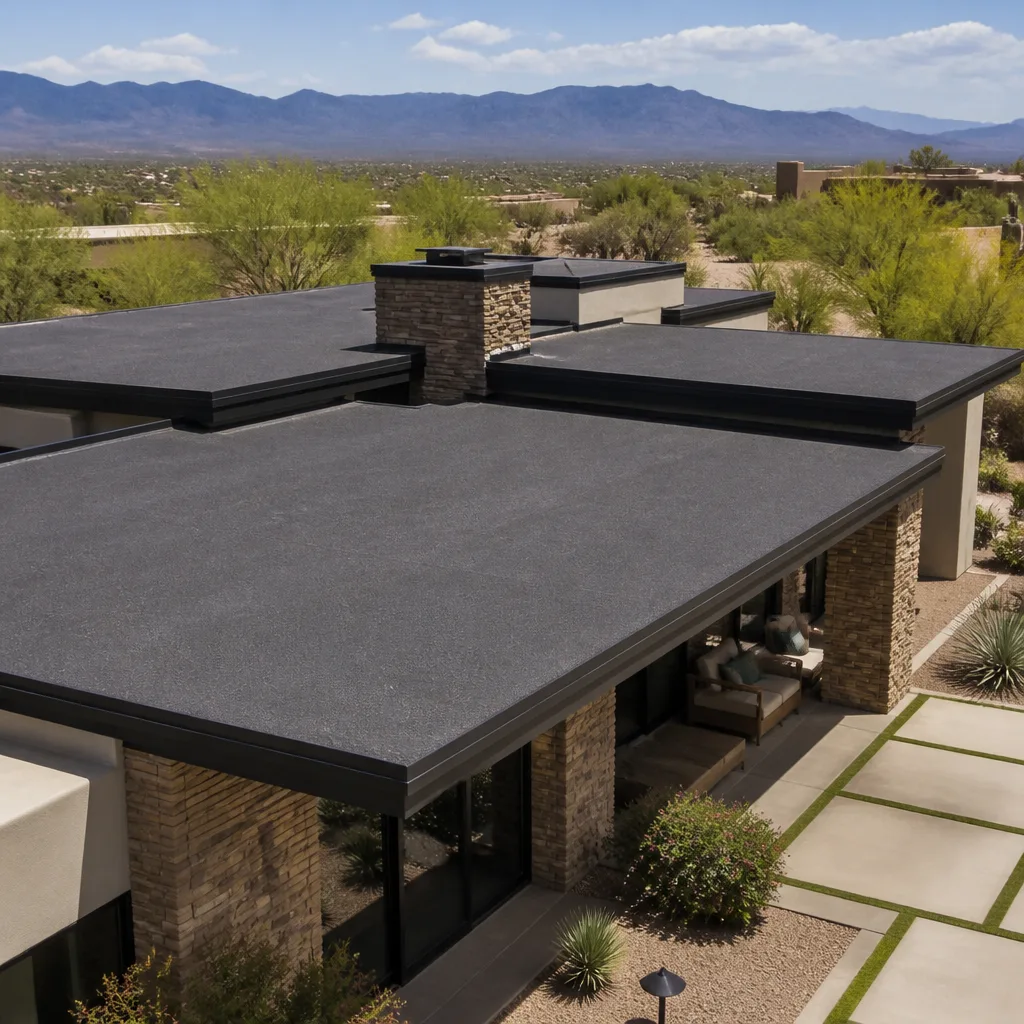 Flat & low-slope
Free roof inspection with deck photos before we talk money - GAF and Owens Corning certified installation
Seasonal Roofing Care for Thousand Oaks: Year-Round Homeowner’s Guide
In October 2019, the Easy Fire burned within miles of Thousand Oaks neighborhoods while Santa Ana winds topped 70 mph. That same wind season lifted ridge caps and unseated hip tiles across hundreds of homes that had passed a summer inspection with no issues. Roofs here don’t fail during seasons. They fail during events. This guide walks you through what those events are, when they hit, and exactly what to do about them – organized around the three real seasons we actually experience in Thousand Oaks, not the four on a calendar. For more guides & resources, see our blog.
Quick Answer
Seasonal roof care in Thousand Oaks means preparing for three distinct weather threats: Santa Ana winds from August through October, heavy rain from November through March, and intense UV exposure from April through July. A practical maintenance plan means clearing debris before wind season, checking for leaks after the first rain, and watching for granule loss and tile oxidation after the summer bake. Most of this can be done safely from the ground or gutter level, twice a year, in about two hours total.
Styles & brands we work with
Table of Contents
- Fire-Wind Season: August Through October
- Rain Season: November Through March
- UV-Bake Season: April Through July
- Why Attic Ventilation Matters More Than You Think
- The Two-Hour Walkthrough: Ground and Gutter Level
- Common Mistakes to Avoid
- When to Call a Professional
- Frequently Asked Questions
Fire-Wind Season: August Through October
Thousand Oaks has a fire season with a roof problem attached to it. Every August through October, Santa Ana winds arrive from the northeast, dry and fast, often sustained at 30 to 50 mph with gusts well past 70. These aren’t storms. They’re wind events that can last three days. And they do two things to roofs. They scour loose material off the surface, and they carry embers from fires that can start 10 miles away.
Here’s what to do before the winds start. Every year, in late July or early August, walk your property and look up. Dry leaves, pine needles, and accumulated dust in valleys and behind chimneys create a layer that catches embers faster than bare roofing material does. Clear roof valleys and gutters. Check ridge caps and hip tiles for looseness. If you can see daylight under a cap from the ground with binoculars, a 70 mph gust will find it. In our experience across Thousand Oaks, wind damage rarely comes as a dramatic tear. It comes as one lifted cap that lets water in months later during the first rain. That pattern repeats every year in neighborhoods like Lynn Ranch and Wildwood.
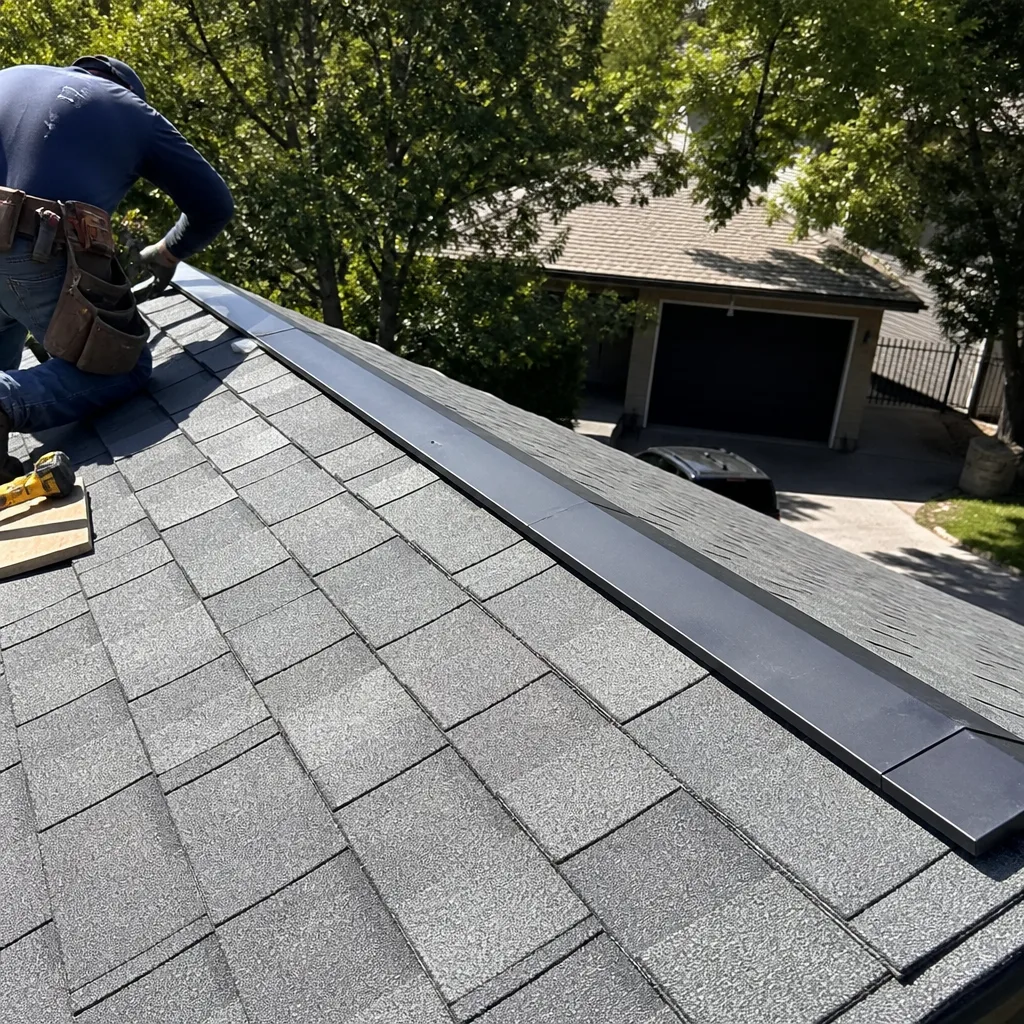
Ember-resistant ridge vents matter more than most homeowners in Ventura County fire zones realize. A standard ridge vent is a gap at the peak of the roof covered by a cap. If the cap is loose or the vent mesh is damaged, embers get into the attic, and that’s where house fires start during wind-driven events. In designated fire hazard zones, building code in Ventura County now requires ember-resistant vents with fine mesh screens. If your home was built before about 2010, there’s a good chance your ridge vents don’t meet the current standard. Replacing them is a relatively low-cost job that addresses the single most common entry point for embers.
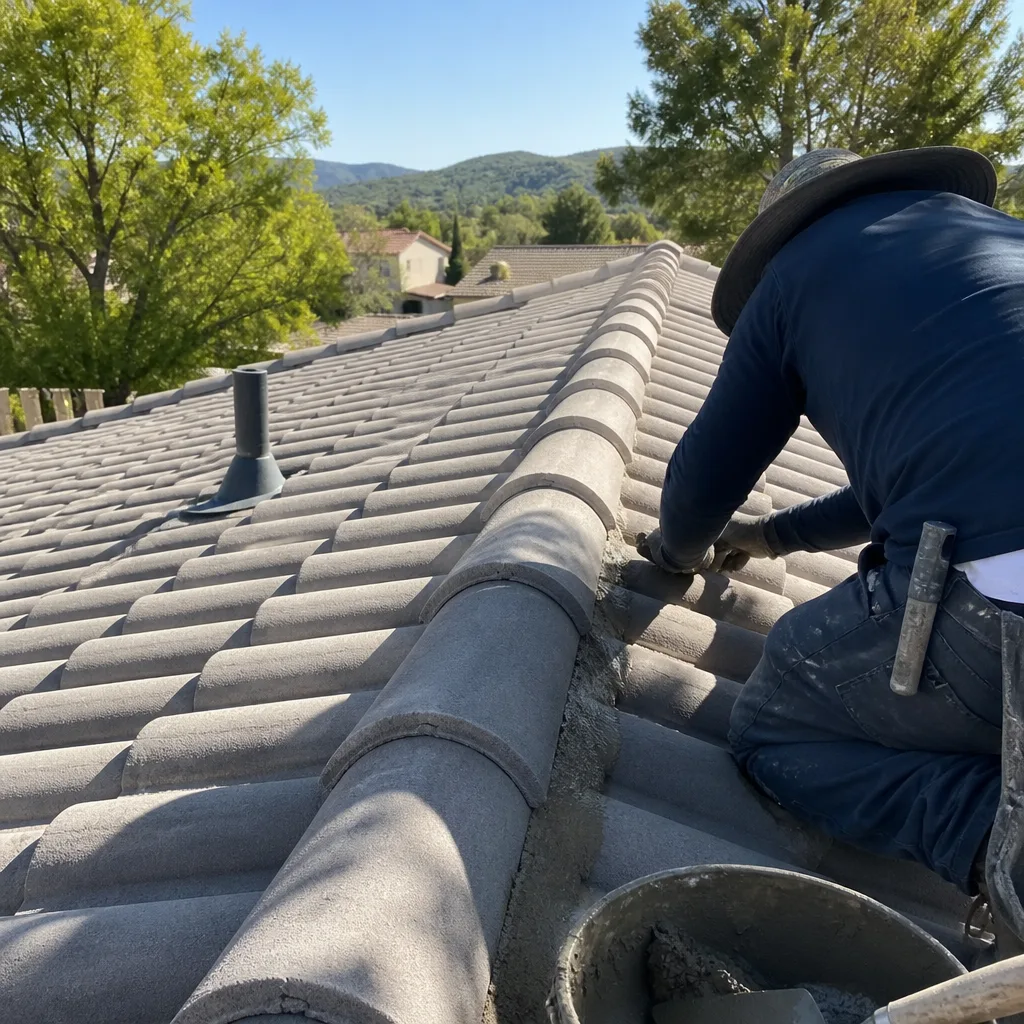
We’ve also seen tile roofs take quiet damage during wind season. Concrete and clay tiles are heavy and most handle wind well, but the hip tiles at the roofline’s corners and ridge tiles at the peak sit at odd angles. Wind gets under them. A loose hip tile on the windward side of a house in Thousand Oaks is a ticking repair. Check those angles every fall. This is the season for damage prevention, and a Roof Repair in Thousand Oaks professional can spot the early signs before they become a bigger problem.
Also worth knowing: if the wind season comes with smoke but no visible damage, don’t assume your roof is fine. Ash accumulates in gutters and roof valleys. It’s acidic. Let it sit for months, and it degrades asphalt shingle granules and eats at metal flashing. You might not see the damage now, but you’ll pay for it when the material ages prematurely. A hose-off from the ground with a spray nozzle can clear most ash accumulation from roof edges. Keep it gentle. High-pressure washing from a ladder is where homeowners do more harm than good.
Rain Season: November Through March
Thousand Oaks gets most of its rain in a handful of storms between November and March. A single storm can drop two to three inches in 24 hours. That’s enough to expose every weakness a roof developed during the dry months: loose flashing, cracked tile, shifted ridge caps. The first storm tells you what the wind season broke.
Here’s how to tell an active leak from a dormant one. An active leak shows up during or immediately after rain as a wet spot, a drip, or a water stain that’s damp to the touch. A dormant leak is what roofers call a roof that’s vulnerable but not currently leaking – which often means the moisture is entering but traveling along a rafter or sheathing before it appears as a stain. In attics after the first heavy rain, homeowners often see a small dark ring on plywood sheathing that’s dry by the time they find it. That’s a dormant leak in the making. If you find one, mark the location with a pencil and check it again after the next storm. Same size, no growth, completely dry? It may be old. Growing or damp? You have an active problem.
If water is coming into your living space, what can you do before a contractor arrives? First, contain it. Put a bucket under the drip. If the drywall is saturated and bulging, poke a small drainage hole with a screwdriver so the water releases in a controlled place rather than collapsing the ceiling. Second, minimize water entry. If you can see the source from a ladder – never from the roof itself during rain – you can use a tarp. But tarps are temporary and not a repair. They deflect water for a few days at best. Third, take photos. Insurance adjusters respond better to documented water intrusion than to descriptions. If the leak is substantial – water coming through a ceiling, multiple rooms affected, or water coming through a light fixture – call your insurance company. If it’s a small drip, calling a roofer first is often cheaper in the long run, before a claim affects your premiums. Not sure how to choose one? Read How to Hire a Roofing Contractor in Thousand Oaks: A Step-by-Step Guide..
One more rain-season detail that most guides skip: crawlspace and attic inspections after the first storm. In Thousand Oaks, with our clay-heavy soils and quick drainage, water that doesn’t stay on the roof can still be a roof problem. Water that leaks from a valley or chimney flashing can run down the interior of an exterior wall and pool in the crawlspace, where you’ll never see it from the living room. After the first heavy rain of the season, take a flashlight into the crawlspace and look for sheen on the dirt or moisture on foundation wood. If you see any, trace it upward. The problem is usually at the roof.
Mercer Roofing Co Thousand Oaks sees the same repair pattern every November. A homeowner calls about a leak in the living room. The actual issue is at the roofline 15 feet away, where wind-damaged flashing let water travel horizontally along the roof deck before it dripped into an interior wall. That’s why we always trace leaks to their source rather than patching the visible stain. Water moves in ways that surprise most homeowners.
UV-Bake Season: April Through July
Thousand Oaks averages 280-plus sunny days per year. But it’s the intensity of the sun that matters, not just the count. Our UV index in June and July regularly hits 10 or 11, classified as extreme. That’s direct, unfiltered radiation hitting your roof for six to eight hours a day. Asphalt shingles and tile coatings both degrade under it, just in different ways.
For asphalt shingles, the damage shows up as granule loss. Granules are the sand-like ceramic particles embedded in the shingle surface. They exist to reflect UV light and protect the asphalt underneath. When granules erode, the shingle starts to look blotchy, with dark patches where the asphalt is showing through. You’ll see granules in your gutters – that’s normal over time, but a quarter-inch pile in one season is not. If you find them collecting, especially on a roof that’s 10 to 15 years old, you’re watching UV degradation in action. The shingles haven’t failed yet. But the clock has sped up.
For concrete tile roofs, UV-bake season causes a slower but similar process: surface oxidation. Tile coatings fade and chalk over years of exposure. You can test for it by running a hand across a tile (if you can reach it safely from the ground). If your hand comes away with a chalky residue, the tile’s protective coating has broken down. The tile isn’t leaking necessarily, but it’s absorbing more moisture during rain season than a coated tile would. That moisture expands and contracts with temperature swings, which is how hairline cracks start. We see this pattern most clearly in the older neighborhoods of Thousand Oaks where tile roofs are 20 to 30 years old.
GAF, CertainTeed, and other manufacturer-recognized shingle brands now formulate their products specifically for high-UV climates. But even the best shingle needs good attic ventilation to handle Thousand Oaks heat – more on that below. If you’re planning to replace a roof in the next few years, ask about UV-rated shingles or reflective tile coatings. They’re not marketing gimmicks. In a climate with our sun exposure, the difference in longevity is measurable.
During UV-bake season, also check your roof penetrations: plumbing vents, skylights, and chimney collars. Heat causes rubber boots around pipes to crack and shrink. That’s the single most common source of small, slow leaks in Thousand Oaks homes, and it’s a repair most homeowners can spot by simply looking for cracking or brittleness around the boot from a ladder. If the boot is cracked, it’s a low-cost replacement. If you wait, the leak you get next winter will cost considerably more in drywall repair.
Why Attic Ventilation Matters More Than You Think
Attic ventilation is the least visible part of your roof system and often the most consequential. The principle is straightforward: cool air enters at the soffits, warm air exits at the ridge. The airflow keeps the attic temperature close to the outside temperature. When that airflow is blocked or inadequate, the attic bakes. In Thousand Oaks, with our thermal cycling between hot days and cool nights, a poorly ventilated attic can accelerate sheathing degradation in ways that shorten the life of the roof above it.
Here’s what we see. In a Thousand Oaks summer, an inadequately ventilated attic can reach 140 degrees or more. That heat radiates downward, cooking the underside of the roof decking. Plywood sheathing exposed to those temperatures for years darkens, then delaminates. The shingles above it age faster because they’re being heated from below as well as above. Underlayment becomes brittle. Fasteners start to work loose. Nail pops appear. Each of these is a small, quiet failure that compounds. A roof in a poorly ventilated attic may last 10 to 15 years when the same materials in a properly ventilated attic would last 20 or more.
The most common ventilation problem in older Thousand Oaks homes is not a lack of vents. It’s an imbalance. Homes built in the 1970s and 1980s often have ridge vents and gable vents but no adequate soffit intake. Without intake, the ridge vent has nothing to pull from. The result is dead air. We’ve also seen the opposite problem: soffit vents present but blocked by insulation that was added later, usually during a re-insulation project that didn’t account for airflow. The fix can be as simple as raking insulation back from the soffits or as involved as adding baffles and new intake vents. Either way, it’s a fraction of the cost of replacing a roof prematurely.
If you go into your attic on a hot July afternoon and the air is stagnant and oppressive, that’s not just what attics do. That’s ventilation failure. Pay attention to it. The roof above that attic is aging faster than it should, and you’ll pay for it sooner or later, usually at the worst possible time.
The Two-Hour Walkthrough: Ground and Gutter Level
You don’t need to walk your roof. In fact, you shouldn’t. A roof walk by an untrained homeowner causes more damage than it prevents – cracked tiles, broken shingles, and injuries. Everything you need to spot can be seen from the ground with a pair of binoculars, a ladder placed securely against the gutter line, or by checking the attic. Here’s a practical routine you can complete safely in about two hours, twice a year: once in late October before the rains start, and once in May after the UV-bake season begins.
Step 1: The Ground Survey (15 minutes). Walk the perimeter of your home with binoculars. Look at ridge lines, hip lines, valleys, and any flashing around chimneys or skylights. You’re looking for anything that stands out: a cracked tile, a shifted cap, a gap in the metal flashing, a missing shingle. On a tile roof, look for tiles that are no longer straight in their rows. On an asphalt roof, look for shingles that are curling, blistered, or losing color in patches.
Step 2: The Gutter Check (30 minutes). Clear your gutters and downspouts. Use a ladder, a glove, and a bucket. While you’re up there at gutter level, you can safely inspect the roof edge. Look for granule accumulation in the gutter – a sign of shingle wear – or broken pieces of tile that have slipped down from above. Make sure downspouts direct water at least three feet away from the foundation. In Thousand Oaks, with our quick-draining soils, this detail is frequently overlooked and frequently the cause of foundation moisture issues.
Step 3: The Penetration Audit (15 minutes). While on the ladder, inspect every pipe boot, vent collar, and chimney flashing you can reach from the gutter line. Touch the rubber boots. Do they flex? If they crack or crumble in your fingers, they need replacement before rain season.
Step 4: The Attic Inspection (30 minutes). Go into the attic on a sunny day with a flashlight. Turn off the light and look for pinholes of daylight coming through the roof deck – they indicate gaps in the roofing material. Check the underside of the sheathing for dark stains, which are moisture marks. Look at the insulation. It should not be touching the roof deck at the eaves. Give it an inch or two of airspace.
Step 5: The Crawlspace Check (20 minutes). If you have a crawlspace, check it for moisture after any significant rain. A dry crawlspace during the dry season tells you nothing. Check it during or within 48 hours after a rain event.
Step 6: Document Everything (10 minutes). Take photos of anything that looks off. Compare them to the last walkthrough. The comparison tells you whether something is progressing or stable, which is the single most useful piece of information a contractor or adjuster needs.
Common Mistakes to Avoid
- Walking the roof to inspect it. A roof walk by an untrained person breaks tiles, loosens granules, and risks a serious fall. Everything visible from the roof is visible from the ground with binoculars or from gutter level.
- Patching a leak without finding the source. Water travels along roof decks and rafters. The stain on your ceiling is rarely directly below the actual entry point. Patching the visible spot delays the real repair while the hidden damage continues.
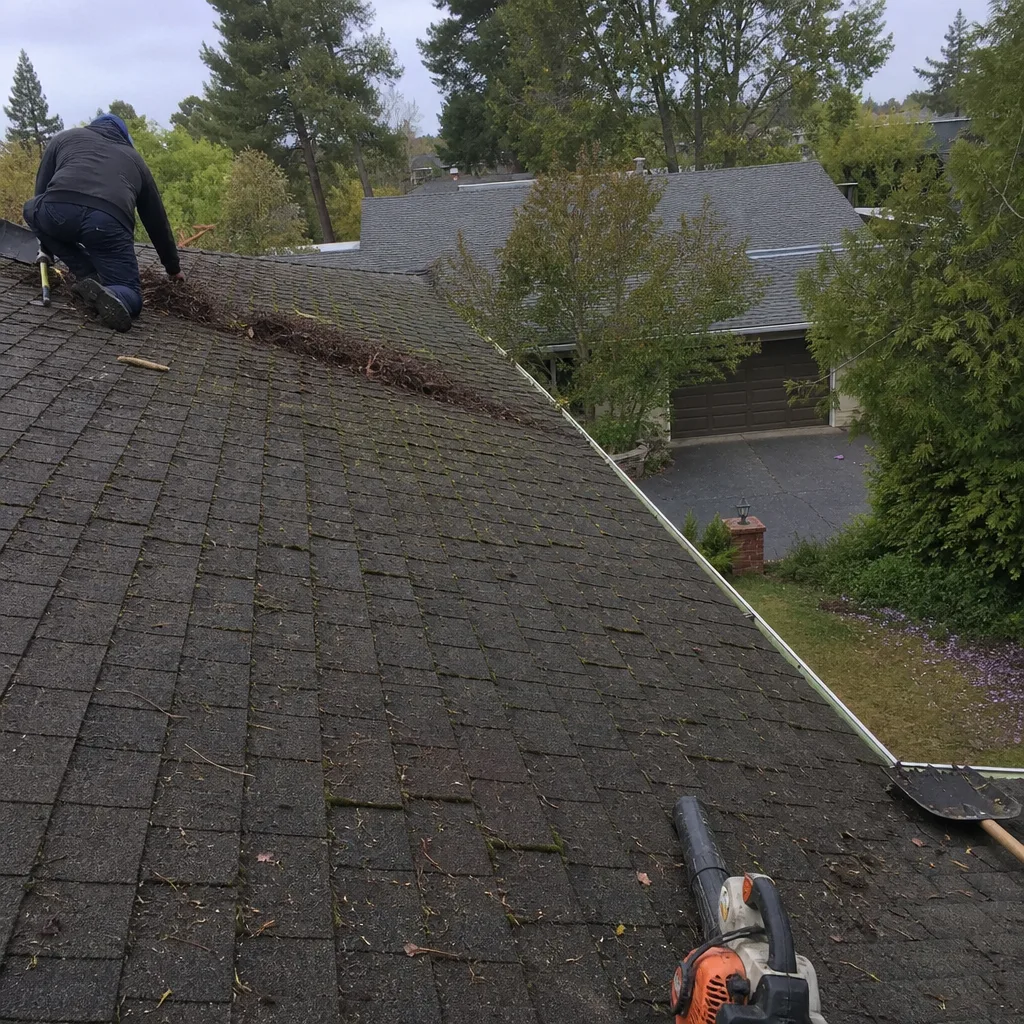
- Ignoring the gutters for months. In Thousand Oaks, wind season fills gutters with leaves and ash, then rain season turns that debris into a dam. Water backs up under the roof edge and rots fascia boards. Clear gutters in October and again in January.
- Replacing shingles without addressing ventilation. A new roof on a poorly ventilated attic is like new tires on a misaligned car. The problem wasn’t the materials. The problem is the heat. Fix the airflow first, or expect premature failure.
- Using a pressure washer on a tile roof. High-pressure water strips tile coatings and forces water under tiles into the underlayment. A gentle hose rinse from the ground is the most aggressive cleaning a homeowner should attempt.
- Waiting until a leak shows up inside the house. By the time water appears on a ceiling, it has already traveled through the roof deck and insulation. The repair is now a roofing job plus a drywall and insulation job. Twice-a-year inspections catch issues when they’re still cheap and local to the roof.
- Making an insurance claim for a small repair. A minor leak from a pipe boot is usually a few-hundred-dollar fix. Filing a claim can raise premiums and mark the property. Get a repair estimate first. If the repair cost is less than or close to your deductible, pay for the repair out of pocket.
When to Call a Professional
Some roofing issues are worth handling yourself. A lot are not. Call a professional when you find a leak you can’t trace to its source, when you see multiple cracked or slipped tiles after a wind event, when your attic shows widespread moisture staining, or when a granule flush in your gutters indicates shingle failure on a roof that’s 15 years or older. If you’ve done the walkthrough and found something that worries you, act on it sooner rather than later. Small issues become expensive ones during the next rain. Mercer Roofing Co Thousand Oaks offers free estimates in Thousand Oaks – call (805) 309-3314, and a live person answers 24/7, every time.
Frequently Asked Questions
Twice a year is the minimum: once in late October before the rain season starts, and once in May after the UV-bake season begins. Add a third inspection after any wind event with gusts over 50 mph, which happens reliably during Santa Ana season in Thousand Oaks. Call (805) 309-3314 if you want a professional set of eyes on anything you find.
Most small repairs in Thousand Oaks – a cracked tile, a lifted ridge cap, a pipe boot replacement – run between $250 and $650. Moderate repairs, like a section of flashing replacement or multiple tile work, typically run $650 to $1,500. Larger structural repairs depend on the extent of the damage. The only way to get an accurate number is an inspection, and estimates are free.
Not with Mercer Roofing Co Thousand Oaks. Every job includes a written price before any work begins, and that written price is the price you pay. No change orders, no surprises on the invoice. If we find additional damage during the repair, we show you photos and a written quote for the additional work before proceeding, and you decide.
For roof replacements and structural repairs, yes. Ventura County and the City of Thousand Oaks require permits for replacements and most structural work, and the permit itself is handled as part of the project. For small repairs like tile replacement or flashing work, permits are typically not required, but we’ll tell you if your specific job needs one before any work starts. For a full Roof Installation in Thousand Oaks, expect a permit process with inspections.
Most asphalt shingle replacements in Thousand Oaks take two to four days, depending on the size and complexity of the roof. Tile roofs take longer, usually five to eight days. Weather delays happen – Santa Ana winds can push a schedule – but we provide a written timeline with every quote and keep you updated throughout the job.
Before any technician arrives at your door, we send you their name and photo. When they ring the bell, they present a photo ID badge and wear a clean, marked uniform. Every Mercer technician is background-checked and identity-verified under the Threshold Standard. And every repair includes a written guarantee that lasts 365 days, with a free second visit if the repair fails. If it’s not done right, we make it right, backed in writing. To learn more about our approach, start with the Mercer Roofing Co Thousand Oaks home page.
The Bottom Line
Thousand Oaks roofing care comes down to matching maintenance to the actual weather we get: winds, rain, and sun. For a deeper look at everything covered here, see The Complete Guide to Roofing in Thousand Oaks. Clear debris before the Santa Anas. Check for leaks after the first storm. Watch for granule loss and tile oxidation during the summer months. Keep your attic ventilated and your gutters clear year-round. Do the two-hour walkthrough twice a year, document what you see, and call a professional when something changes. The homeowners who pay the least for roofing over a 20-year span are the ones who catch problems early, before a quiet crack becomes a visible leak. If you’re ready for a professional inspection, call (805) 309-3314 for a free estimate. A live person answers, 24/7, every day of the year.
Written by Grant Whitlock, Owner at Mercer Roofing Co Thousand Oaks, serving Thousand Oaks since 2000.
See the difference
 Before
 After
After Before
 After
After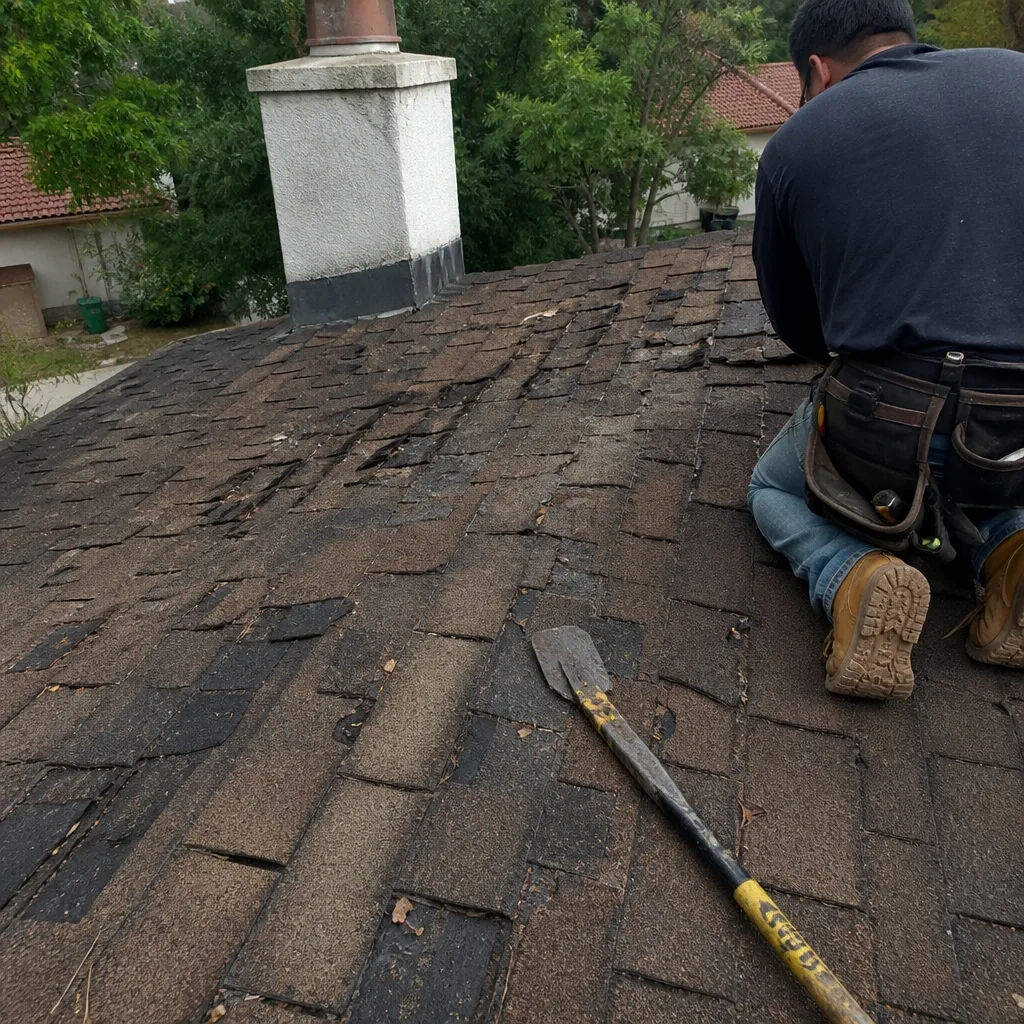 Before
 After
After