
Last updated October 17, 2026
 Metal roofing
 Architectural shingles
 Tile roofing
 GAF
GAF Flat & low-slope
Free roof inspection with deck photos before we talk money - GAF and Owens Corning certified installation
DIY vs Professional Roofing: The Thousand Oaks Homeowner’s Decision Guide
A California homeowner can legally replace their own roof. But in Thousand Oaks, much of which sits inside a High Fire Hazard Severity Zone, a self-performed re-roof that uses a non-listed material or skips the permit can trigger a policy exclusion if a fire loss claim is filed later. That single fact changes the DIY math more than any tool rental or YouTube tutorial ever will. This guide draws the real line between what a careful homeowner can handle and what requires a licensed professional, with the liability, insurance, and Thousand Oaks code context most more guides & resources gloss over.
Styles & brands we work with
Quick Answer
DIY roof work in Thousand Oaks is genuinely appropriate for small, low-risk tasks: clearing debris from valleys and gutters, replacing one cracked tile with a matching spare, reseating a popped nail. Full roof replacement, any work involving underlayment or flashing, and any repair near a roof-to-wall transition should be handled by a licensed professional, both because of the permitting requirements in Thousand Oaks’ fire-hazard zones and because your homeowner’s insurance policy likely contains exclusions that leave you unprotected if self-performed work fails. The realistic cost difference between careful DIY and a warranted professional installation is smaller than most homeowners assume once materials, tools, safety equipment, disposal, and the probability of a correction visit are included. Roof repair in Thousand Oaks is often the more financially sensible option.
Table of Contents
- What California Law Actually Allows a Homeowner to Do
- What the Thousand Oaks Building Department Requires
- The Insurance Policy Language You Must Read First
- The Honest Cost Comparison: DIY vs Professional in Thousand Oaks
- Genuinely Safe DIY Tasks for the Careful Homeowner
- Tasks Where One Mistake Causes Cascading Water Damage
- How to Evaluate a Handyman Roofing Offer
- Common Mistakes to Avoid
- When to Call a Professional
- Frequently Asked Questions
- The Bottom Line
What California Law Actually Allows a Homeowner to Do
California Business and Professions Code Section 7044 contains what contractors call the “owner-builder exemption.” It says a property owner may act as their own contractor on their own residence without holding a contractor’s license. The law treats you as the general contractor on the project. That sounds liberating, and legally it is. But it also transfers every responsibility a licensed contractor normally carries onto you, the homeowner.
When you act as an owner-builder in Thousand Oaks, you personally become responsible for worker safety on the job site. If a roofer you hire to help slips and falls, you are the employer in the eyes of California workers’ compensation law. That means a fall injury on your roof can become a claim against your homeowner’s insurance policy, or worse, a personal liability judgment against you. A licensed roofing contractor carries workers’ compensation insurance that shields you from that exposure. An owner-builder does not.
The exemption also does not excuse you from any building code requirements. The work must still be permitted where permits are required, and it must still pass the same inspections. California’s Title 24 energy standards apply to owner-builder re-roofs just as they do to contractor work. For homeowners in Thousand Oaks, where the local climate swings from 100°F summer highs to occasional frost in the winter, the cool-roof and ventilation requirements are not optional paperwork. They affect how the roof performs and whether it meets resale disclosure standards.
What most guide articles fail to mention is that the owner-builder exemption applies only to your primary residence. If you own a rental property in Thousand Oaks, a second home, or an ADU you rent out, you cannot legally act as an owner-builder on it. Rental properties require a licensed contractor, full stop. Several Thousand Oaks homeowners have discovered this detail only after starting work on a rental and being told by the building department to stop and hire a licensed roofer. We have heard those stories often enough that we mention it whenever the question comes up.
So California law gives you the legal right to do the work. What it does not give you is the legal protection a licensed contractor carries for you. That distinction matters more in Thousand Oaks than it does in most California cities, and the next section explains why.
What the Thousand Oaks Building Department Requires, Even for Owner-Performed Work
The City of Thousand Oaks enforces the California Residential Code and the California Fire Code. Large portions of the city, including much of the hillside residential area and neighborhoods adjacent to open space, fall within a designated High Fire Hazard Severity Zone. That designation is not a suggestion. It changes what materials can legally go on a roof and what documentation the building department demands.
For any re-roof in Thousand Oaks, the building department requires a building permit, even when the property owner performs the work. The permit application asks for the roof assembly details: what underlayment you are using, what roof covering, what ventilation, and what edge details. The building department checks these materials against the current California Residential Code and, for properties in the fire hazard zones, against Chapter 7A of the California Building Code, which governs wildfire-resistance requirements for building materials.
Chapter 7A is where many DIY re-roofs in Thousand Oaks get stopped. It requires that roof coverings in fire hazard zones be either a Class A assembly or a material specifically listed and tested for Chapter 7A compliance. Walking into a big-box store and buying a bundle of shingles that “looks like the old ones” does not satisfy this requirement if the product is not listed. The building department will ask for the listing documentation. If you cannot produce it, the permit is denied or the inspection fails.
Owner-performed work also requires inspection just like contractor work. The building department will not pass a roof simply because the person doing it owns the house. The inspector still walks the roof, checks the nailing pattern, looks at the underlayment laps, verifies the flashing, and confirms the ventilation meets the current code. When a licensed Thousand Oaks roofing contractor performs the work, they are responsible for scheduling those inspections, being present for them, and correcting any item the inspector flags. When you do the work yourself, that responsibility is yours, and you pay the reinspection fee each time the work fails a check.
One more detail that matters in Thousand Oaks specifically: many homes in the Conejo Valley were built between 1960 and 1990 with roof decks that do not meet current nailing or decking standards. When you open up a roof for a re-cover, the inspector will require the existing decking to be corrected to current standards before the new underlayment goes on. That correction often means re-nailing the entire deck at a tighter spacing, or replacing sections of plywood that have weathered. A homeowner who planned for shingles and underlayment only discovers a several-thousand-dollar decking line item mid-project. A professional roofer sees that condition in the estimate phase and includes it in the written price before work begins. That is the difference between a plan and a surprise.
The Insurance Policy Language You Must Read First
Before you lift a shingle, open your homeowner’s policy and look for two specific exclusion clauses. The first is the “faulty workmanship” exclusion, standard in most HO-3 policies. It says the insurer will not pay for damage caused by defective design, materials, or workmanship. If you install a roof yourself and a seam opens during the next heavy rain, the water damage inside your home may not be covered. The insurance company will call the roof failure faulty workmanship, and because you performed it, the exclusion applies directly to you.
The second is the “unpermitted alteration” or “illegal construction” exclusion, which appears in many California policies and has become more aggressively enforced in fire-prone regions. It says if work was done without a required permit and a covered loss is traceable to that work, the claim can be denied. In Thousand Oaks, where a permit is required for re-roofing, an unpermitted DIY roof creates a standing basis for denial on any subsequent roof-related claim: wind damage, water intrusion, even a fire claim if the roof covering’s non-compliance is flagged during the adjuster’s review. This is not a hypothetical. After the Woolsey Fire, some Ventura County homeowners whose unpermitted work could be documented faced exactly this situation during claims adjustment.
The fire hazard zone adds another layer. Many insurers writing policies in Thousand Oaks now require homeowners to certify at underwriting that the roof is either original and in good condition or replaced with a Class A assembly installed by a licensed contractor with permits closed. Some carriers ask for the permit number or the contractor’s license number as part of the application. A self-performed re-roof without a completed permit can make the home uninsurable with certain carriers, and when a home is uninsurable on the standard market, it lands in the California FAIR Plan at significantly higher cost.
What should you actually do? Before starting any roof work yourself, read our How to Hire a Roofing Contractor in Thousand Oaks: A Step-by-Step Guide, then call your insurance agent and ask three questions. One: “If I perform the re-roof myself with a permit and a listed Class A material, does my policy remain in force without a premium change?” Two: “Does my policy contain an unpermitted alteration exclusion?” Three: “Do you require licensed contractor installation for roof replacement on this policy?” Write down the answers, and if the agent tells you the roof needs to be contractor-installed, take that as the end of the DIY conversation for anything beyond minor repair. The insurance policy is not the deciding factor for every homeowner, but it should be a documented part of the decision, not a surprise discovered after a claim.
The Honest Cost Comparison: DIY vs Professional in Thousand Oaks
Let us look at the real dollars-along with our Roofing Cost Breakdown: The Thousand Oaks Homeowner’s Reference for 2026-for a typical Thousand Oaks composite shingle re-roof on a 1,800-square-foot single-story home. Material prices below reflect Conejo Valley and Ventura County supplier pricing as of early 2026, and labor reflects the current Thousand Oaks market.
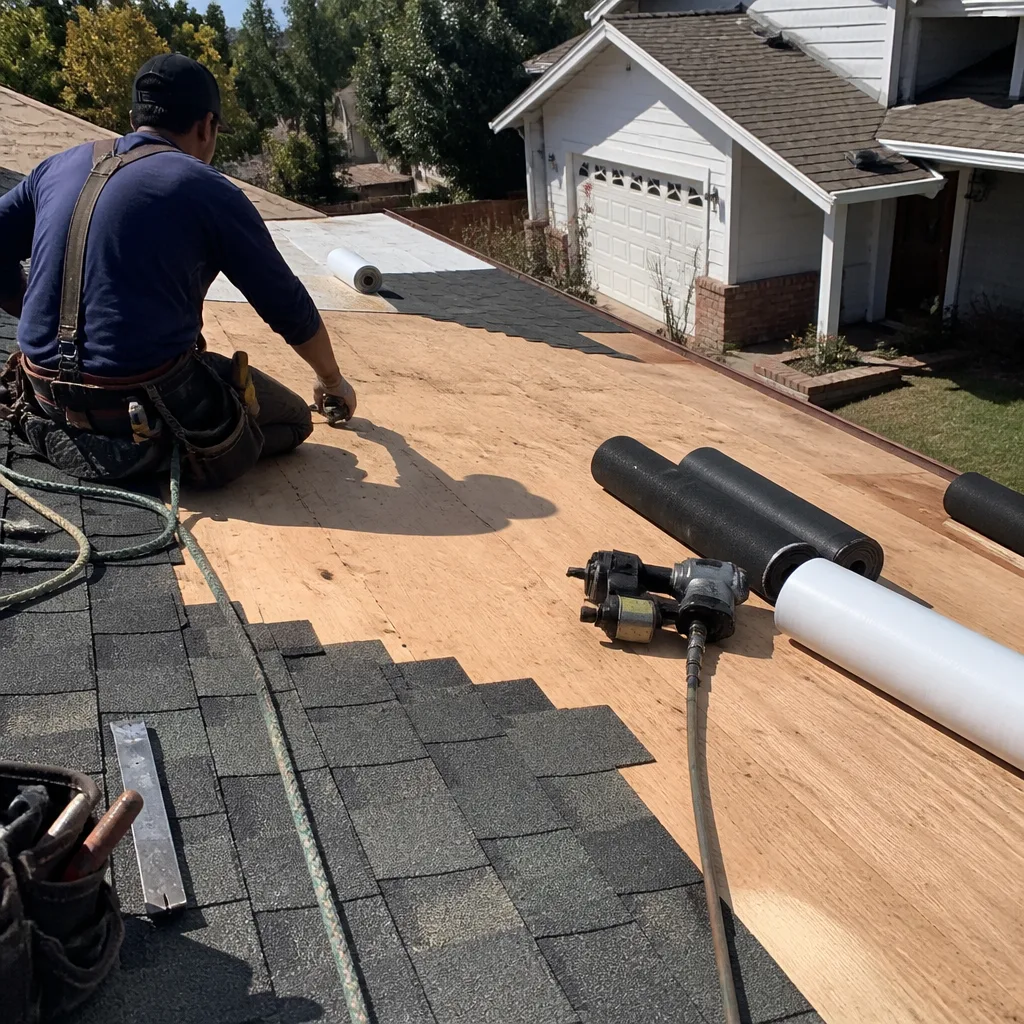
A DIY owner-builder re-roof on that size home requires about 24 squares of shingles with waste, synthetic underlayment, ice and water barrier at the eaves, starter strip, ridge cap, pipe flashings, vent caps, and fasteners. Using a mid-grade architectural shingle from a mainstream brand like Owens Corning or CertainTeed, that material package runs $4,500 to $6,000 at current Thousand Oaks supplier prices. The building permit from the City of Thousand Oaks for a re-roof runs roughly $400 to $700 depending on valuation. Dumpster rental for tear-off debris runs about $500 to $700 for a 20-yard bin in Thousand Oaks. Tool rental, which means a roofing nailer, compressor, shingle cutter, and ladders tall enough for a two-story, runs $200 to $400 for the week. Personal safety equipment, which means a fall-protection harness, roof brackets, and 2×6 safety planks, runs $150 to $250. If you do not already own a framing nailer to re-nail the deck, add $100 for that rental. That puts a realistic bare-minimum DIY budget at $5,850 to $8,150.
That budget assumes nothing goes wrong, you do not miss a single day of work, you do not need to buy tools twice because you bought the wrong thing, and the inspection passes on the first visit. The reality we have seen repeatedly in Thousand Oaks, where the building department’s roofing inspection is detailed and specific, is that owner-builder re-roofs fail the first inspection more often than they pass. The most common failure is nailing pattern, followed by incorrect fastening at the hip and ridge, followed by incomplete paper at the eaves. Each reinspection carries a fee, and each correction costs time and sometimes materials.
A licensed, warranted professional re-roof on the same Thousand Oaks home with a mid-grade architectural shingle from GAF, Owens Corning, or CertainTeed, installed with synthetic underlayment, ice and water barrier, new flashings, permitted and inspected, runs $14,000 to $20,000 depending on tear-off layers, decking condition, pitch, and accessibility. That is a meaningful gap over the DIY bare minimum, but the gap narrows considerably once you add the value of the warranty. A professional installation from a Thousand Oaks roofing company includes a workmanship warranty. When a repair or installation fails within the warranty period, the contractor returns and corrects it, and the correction has its own written guarantee. A DIY roof carries no labor warranty at all. Every future correction is your time and your money.
Here is the cost comparison in table form, for a 1,800-square-foot Thousand Oaks single-story home:
- DIY material package (24 squares, mid-grade architectural shingle): $4,500 – $6,000
- Thousand Oaks building permit: $400 – $700
- Dumpster and disposal: $500 – $700
- Tool and safety equipment rental: $450 – $850
- Total realistic DIY budget: $5,850 – $8,150
- Professional permitted re-roof with warranty, same home: $14,000 – $20,000
- Correction visit if a self-installed roof leaks within year one: $500 – $2,500 or more, unbudgeted
- Correction visit if a warranted roof leaks within year one: $0 under the workmanship warranty
The honest arithmetic is this: DIY saves significant money if the work is done correctly and never needs correction. The probability you will get every detail right on your first full re-roof, with no prior roofing experience, on a Thousand Oaks house with a 4:12 to 6:12 pitch, is low enough that the savings need to be weighed against the risk of a $2,000 correction, or an insurance claim denial, or both. For most Thousand Oaks homeowners, roof installation in Thousand Oaks by a licensed contractor is the financially safer route, even though the upfront number is higher.
Genuinely Safe DIY Tasks for the Careful Homeowner
Not everything on a roof requires a contractor. There is a short list of tasks-a kind of Roof Repair Maintenance Checklist for Thousand Oaks Homeowners-that a careful homeowner can do safely, without a permit, and without touching the parts of the roof system where mistakes compound. These tasks do not involve removing or installing underlayment, do not require disturbing flashings, and do not expose the deck to weather interruption.
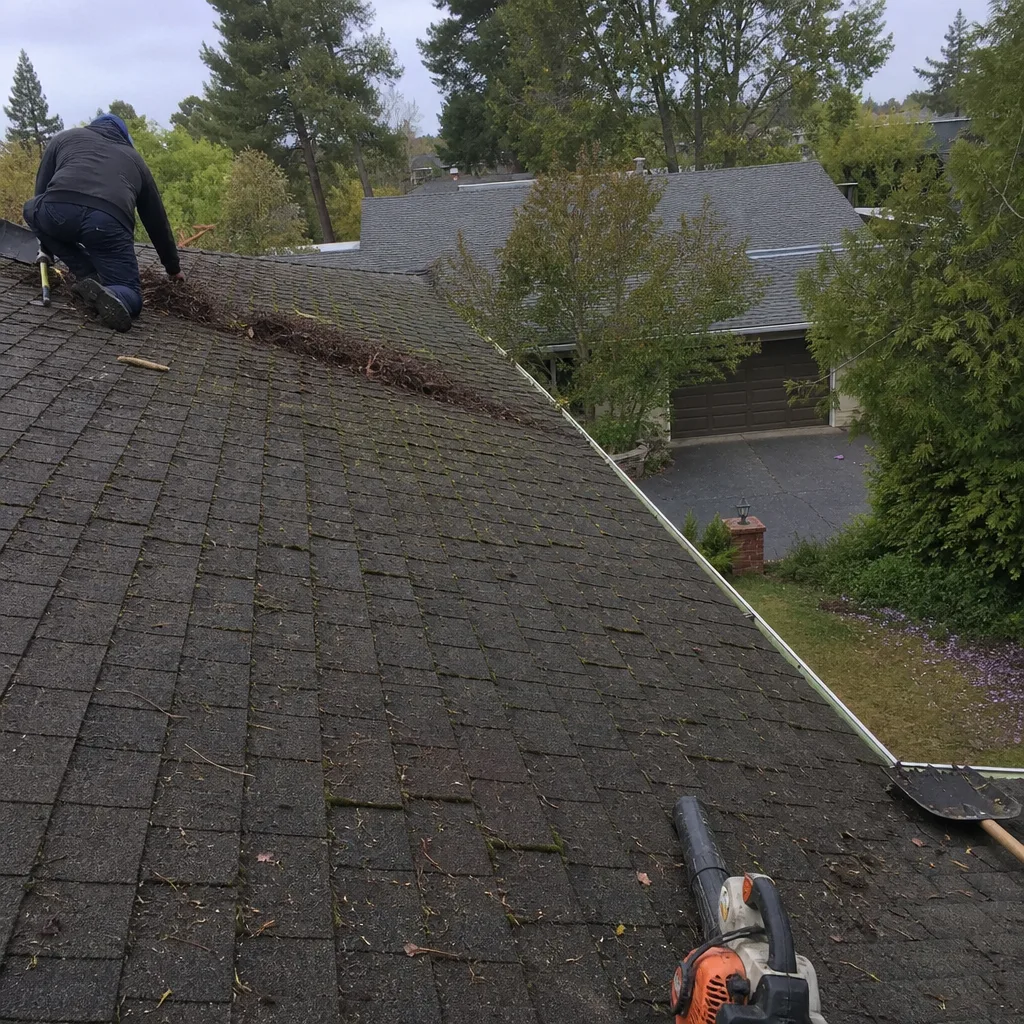
- Clearing debris from valleys and gutters. Leaves, pine needles, and dirt accumulate in roof valleys and along the gutter line. This is especially true in Thousand Oaks neighborhoods with mature oaks, like Lynn Ranch and parts of Wildwood. Debris holds moisture against the roof surface and shortens shingle life. You can clear it with a soft brush or leaf blower from the ground where reachable, or from a correctly secured ladder where not. This requires no permit and no material change.
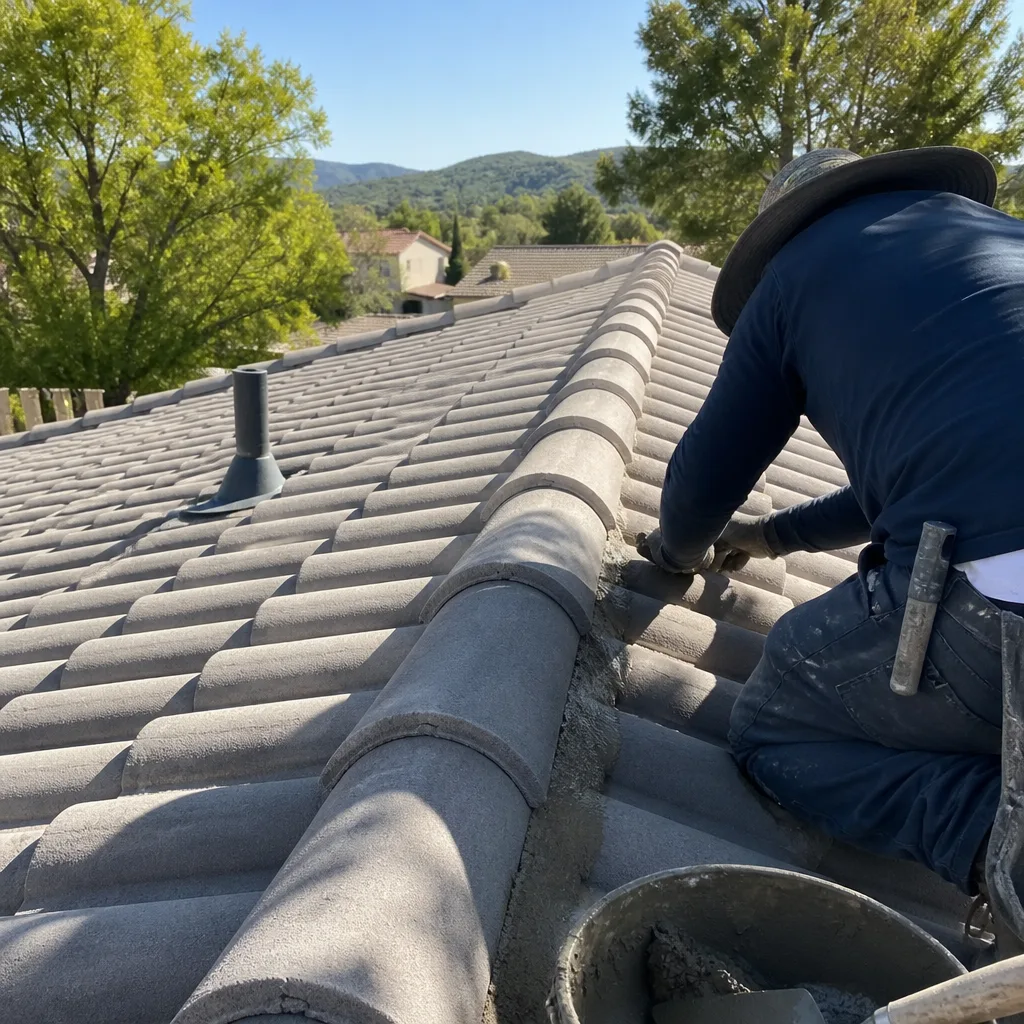
- Replacing a single cracked tile with a matching spare. Most Thousand Oaks homes with concrete tile roofs have spare tiles stacked somewhere in the side yard, left behind by the original builder or a previous owner. If you have a matching spare, replacing one cracked tile is a ten-minute job that involves lifting the tile above, sliding out the broken one, and sliding in its match. You do not need a permit for a like-for-like single tile swap.
- Reseating a popped nail. On older composite roofs, especially those installed in the 1990s and early 2000s, you will sometimes see a nail backing out and pushing a shingle upward. Reseating it means pressing the shingle flat and driving the nail back in with a hammer, then sealing the small tear with a compatible mastic. This is a repair, not a replacement, and no permit is required.
- Inspecting your roof from a ladder, not from the roof surface. Walking on a roof you do not know well can cause more damage than it prevents. But a visual inspection from a ladder at the eaves, looking for obviously missing shingles, lifted edges, cracked tiles, or rusted flashings, requires no special skill and no permit. It is the single most useful thing you can do to catch problems early, especially after our Santa Ana wind events.
For anything beyond these four tasks, the risk profile changes. The minute you lift shingles, expose the deck, pull flashing, or touch the underlayment, you have crossed from maintenance into alteration, and alteration in Thousand Oaks carries permit and inspection obligations. We recommend calling our team at Mercer Roofing Co Thousand Oaks for anything in that category. You will get a written price before work starts, which means you can compare the cost of having us do it against the true cost of doing it yourself, with no obligation.
For the full picture on what professional repair looks like in Thousand Oaks, see our guide to roofing services in Thousand Oaks.
Tasks Where One Mistake Causes Cascading Water Damage
Water intrusion on a roof is rarely a one-spot problem. It starts at a single vulnerable detail and then travels: along the deck, down a rafter, behind a wall, into insulation, and finally through a ceiling somewhere else entirely. Homeowners who have seen a ceiling stain several feet away from the obvious roof damage know how water travels. That is why certain roofing tasks carry a risk profile far beyond what most people expect.
The most dangerous DIY roofing task is any work involving flashing. Flashing is the metal or membrane material that seals the roof at every transition: where the roof meets a wall, where a pipe or vent penetrates, around chimneys, skylights, and valleys. A flashing detail that looks simple from the ground involves multiple layers, proper lapping direction, correct sealant selection, and precise cutting. A flashing installed backward sheds water into the house instead of away from it. A flashing sealed with the wrong product fails within months and leaks into the ceiling below. This is the single most common source of roof leaks in Thousand Oaks and the single most difficult thing for a novice to get right.
Equally dangerous is any work involving the underlayment. The underlayment is the water-shedding layer beneath the visible roof covering. It is the last line of defense when the shingles or tiles fail. Installing underlayment incorrectly, which can mean overlapping it in the wrong direction, fastening it with the wrong fasteners, or leaving it exposed to the sun for too long before covering, creates a roof that leaks the first time it rains. In Thousand Oaks, where winter rain can arrive in concentrated bursts after months of dry weather, a compromised underlayment is a hidden time bomb.
Then there is the work we are legally and ethically required to warn you about: anything involving structural repair, torching, or steep-pitch access. A roof with a pitch above 6:12 requires fall protection and roof brackets to work safely. A roof with rotted decking requires safe removal and replacement of structural sheathing. Torch-down roofing, still present on some flat-roof sections in Thousand Oaks commercial and residential buildings, involves open flame on the roof surface. In a fire hazard zone, that is not a DIY activity under any circumstance. The City of Thousand Oaks enforces hot-work restrictions during red flag and high wind periods, and an open-flame roofing torch in a High Fire Hazard Severity Zone is not something any homeowner should be operating.
Here is the plain-word version: if the task requires a permit, a torch, a nail gun above one story, or a flashing detail, call a professional. A single misplaced flashing or one bad underlayment lap can produce water damage that costs more to remediate than the original roof repair would have cost. That is not an exaggeration. We have pulled ceilings apart in Thousand Oaks homes where a $400 flashing repair, done incorrectly by an unlicensed worker, turned into a $15,000 interior remediation.
How to Evaluate a Handyman Roofing Offer
Every few months in Thousand Oaks, a homeowner tells us a handyman offered to repair their roof for a few hundred dollars in cash. Sometimes the work is fine. A popped nail reseated, a small section of missing shingle replaced with a close match. Some handymen do clean, honest work on small repairs, and a homeowner on a tight budget may reasonably choose that path.
But the risk clusters in a specific place: the moment the handyman’s work crosses from cosmetic maintenance into any repair that touches the water-shedding system. At that point, the handyman’s lack of a roofing contractor’s license, lack of workers’ compensation insurance, and lack of a written warranty become your exposure, not theirs. Here are the exact questions to ask before anyone without a roofing license touches your Thousand Oaks roof.
- Ask for the contractor’s license number and verify it. Roofing work in California requires a C-39 roofing contractor’s license from the Contractors State License Board. You can verify a license at the CSLB website in two minutes. A handyman with no C-39 is not legally allowed to perform roof repair beyond the very narrow $500 handyman exemption. Anything above that limit performed by an unlicensed worker is illegal.
- Ask for proof of workers’ compensation insurance. If the worker is injured on your roof, you want their employer’s workers’ comp policy to cover the claim, not your homeowner’s insurance. A handyman who cannot produce a certificate of workers’ compensation is telling you, in effect, that any injury on your property becomes your liability. That is not a risk you should carry.
- Ask what warranty the work carries, in writing. A legitimate roofer will put the warranty in writing before work starts. A handyman who says “I’ll come back if there’s a problem” without a written guarantee is offering a promise with no mechanism. At Mercer Roofing Co Thousand Oaks, every repair includes a written guarantee, and if the repair fails within 365 days, we return to correct it at no charge. That standard should be your baseline for any roof work, from anyone.
- Ask who pulls the permit if one is required. If the work needs a permit and the handyman says it does not, verify that independently by calling the City of Thousand Oaks Building Division. If the work needs a permit and the handyman refuses to pull one, that is an automatic pass.
What honestly separates a legitimate small contractor from a risk is the paper trail. A licensed contractor carries insurance, provides a written price, and stands behind the work with a written warranty. An uninsured worker passes all the risk onto you. The Thousand Oaks homeowner who asks these four questions before hiring anyone will never be surprised by an unpermitted, unwarranted, unprotected repair.
Common Mistakes to Avoid
- Skipping the permit because “it’s just a re-roof.” In Thousand Oaks, a re-roof requires a permit, and an unpermitted re-roof in a fire hazard zone becomes a standing insurance exclusion. The small permit fee is not the thing to economize on.
- Assuming all shingles are allowed in the fire zone. Not all roof coverings meet Chapter 7A requirements. Big-box inventory often includes materials that the Thousand Oaks building department will not approve. Verify the listing before you buy.
- Trusting a handyman with a flashing repair. Flashing is the hardest detail on a roof to get right and the most common source of leaks. A licensed roofer with a written warranty is the only sensible choice for flashing work.
- Walking on a tile roof without knowing how. Concrete and clay tile crack under foot traffic if you step in the wrong place. The pattern for walking tile roofs is specific, and learning it by breaking several tiles is an expensive education.
- Not reading the insurance policy before starting. The time to discover an unpermitted alteration exclusion is before the work begins, not after a claim is denied. Three questions to your agent, in writing, is the cheapest insurance you will ever purchase.
- Under-budgeting for the decking correction. Older Thousand Oaks homes often need re-nailing or partial deck replacement when the old roof comes off. A professional roofer sees this in the estimate and includes it. A DIY budget typically misses it entirely.
- Assuming DIY savings are pure savings. Your own labor has value, missed work days have cost, and corrections have cost. When the arithmetic includes the realistic probability of a correction visit, the professional number often looks better than the raw material comparison suggests.
When to Call a Professional
Call a licensed roofer when the work involves any of these: a full re-roof, any repair that touches flashing, any work requiring a permit, any work over one story in height, any torch-applied roof system, any repair larger than a few shingles, or any time you cannot confidently answer the question “what is directly under the surface I am about to remove?” These are the situations where the cost of a mistake outruns the cost of the professional, often by a wide margin. In Thousand Oaks specifically, call when the home is in a High Fire Hazard Severity Zone and the work involves the roof covering itself. The code, permit, and insurance interactions are simply too consequential to manage informally.
Mercer Roofing Co Thousand Oaks offers free estimates in Thousand Oaks. Every estimate includes a written price before any work starts, and every repair includes a written guarantee. Call (805) 309-3314 to schedule yours. See Mercer Roofing Co Thousand Oaks home for more.
Frequently Asked Questions
Yes, a homeowner can legally act as their own contractor on their primary residence under California’s owner-builder exemption, but the work must still be permitted, inspected, and completed with materials that meet Thousand Oaks and California code. If your home is in a High Fire Hazard Severity Zone, a Chapter 7A-compliant roof covering is required regardless of who performs the work. Call (805) 309-3314 if you want a written comparison between your DIY plan and a professional estimate.
A permitted, warranted composite shingle re-roof on a typical 1,800-square-foot Thousand Oaks single-story home runs $14,000 to $20,000, depending on tear-off layers, decking condition, pitch, and accessibility. A DIY version of the same project runs $5,850 to $8,150 in materials, permits, disposal, and tool rental, but carries no labor warranty and no protection against installation errors. For a firm written price on your specific home, call (805) 309-3314 for a free estimate.
Your insurance company can deny the claim under the unpermitted alteration exclusion if the loss is traceable to the unpermitted work, and in fire-prone regions this exclusion is increasingly enforced. The safer path is to permit the work, use compliant materials, and keep the permit closure documentation with your insurance paperwork. If you are unsure whether your plan meets Thousand Oaks requirements, call our office and we will explain what the building department looks for.
Yes. Clearing debris from valleys and gutters, replacing a single cracked tile with a matching spare, reseating a popped nail, and doing a visual inspection from a ladder are all safe, permit-free tasks for a careful homeowner. Anything beyond these four tasks starts touching the water-shedding system and should involve a licensed roofer. For anything that feels beyond your comfort, call (805) 309-3314 and we will give you an honest written price.
No, minor like-for-like shingle replacement generally does not require a permit. A permit is triggered when the work is a re-roof, meaning the removal and replacement of the entire roof covering or a substantial section of it. If you are uncertain whether your repair crosses the line, the City of Thousand Oaks Building Division can confirm, or you can ask us on a free estimate visit and we will tell you plainly.
Compare the written price, the materials specified, whether the quote includes permit and inspection line items where required, what warranty is offered in writing, and whether the contractor is licensed and carries workers’ compensation insurance. A quote that is dramatically lower than the others is usually missing one of these elements, and that missing element becomes your liability. Every quote from Mercer Roofing Co Thousand Oaks includes a written price, a written guarantee on repairs, and the 365-Day Done Right Promise. Call (805) 309-3314 to compare ours.
The Bottom Line
The DIY-versus-professional decision for Thousand Oaks roofing is not really a question of skill. It is a question of liability, insurance, permitting, and what happens when a small mistake becomes a large water intrusion. For small, low-risk maintenance tasks, the careful homeowner is well served doing the work themselves. For anything that touches the water-shedding system, crosses into permit territory, or sits inside a fire hazard zone, a licensed roofer with a written warranty is the financially sensible choice. The honest cost comparison shows a narrower gap than most assume, and the insurance risk for unpermitted or faulty self-performed work is real and documented in Thousand Oaks. Get a written price before you decide. It costs nothing and tells you the true cost of each path. Call (805) 309-3314 for a free estimate, and you will have a written number within days.
Written by Grant Whitlock, Owner at Mercer Roofing Co Thousand Oaks, serving Thousand Oaks since 2000.
See the difference
 Before
 After
After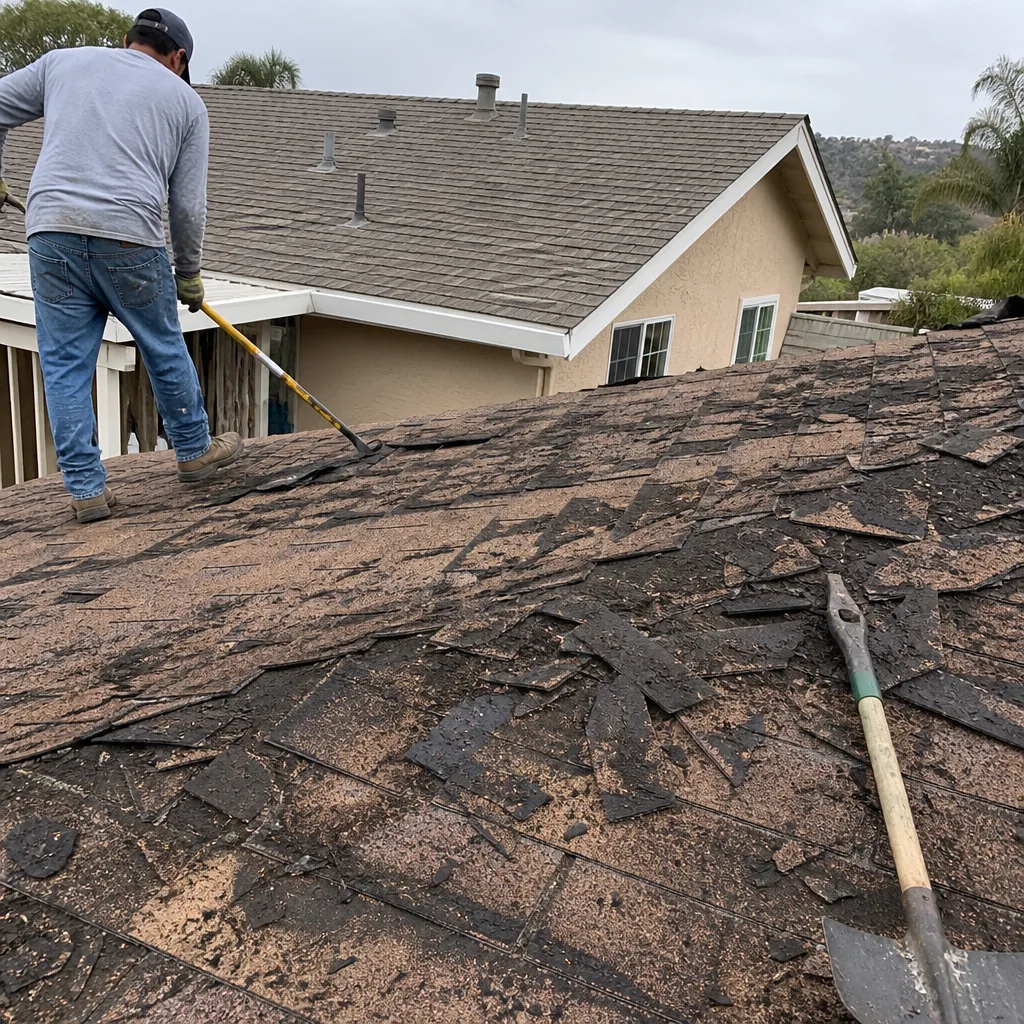 Before
 After
After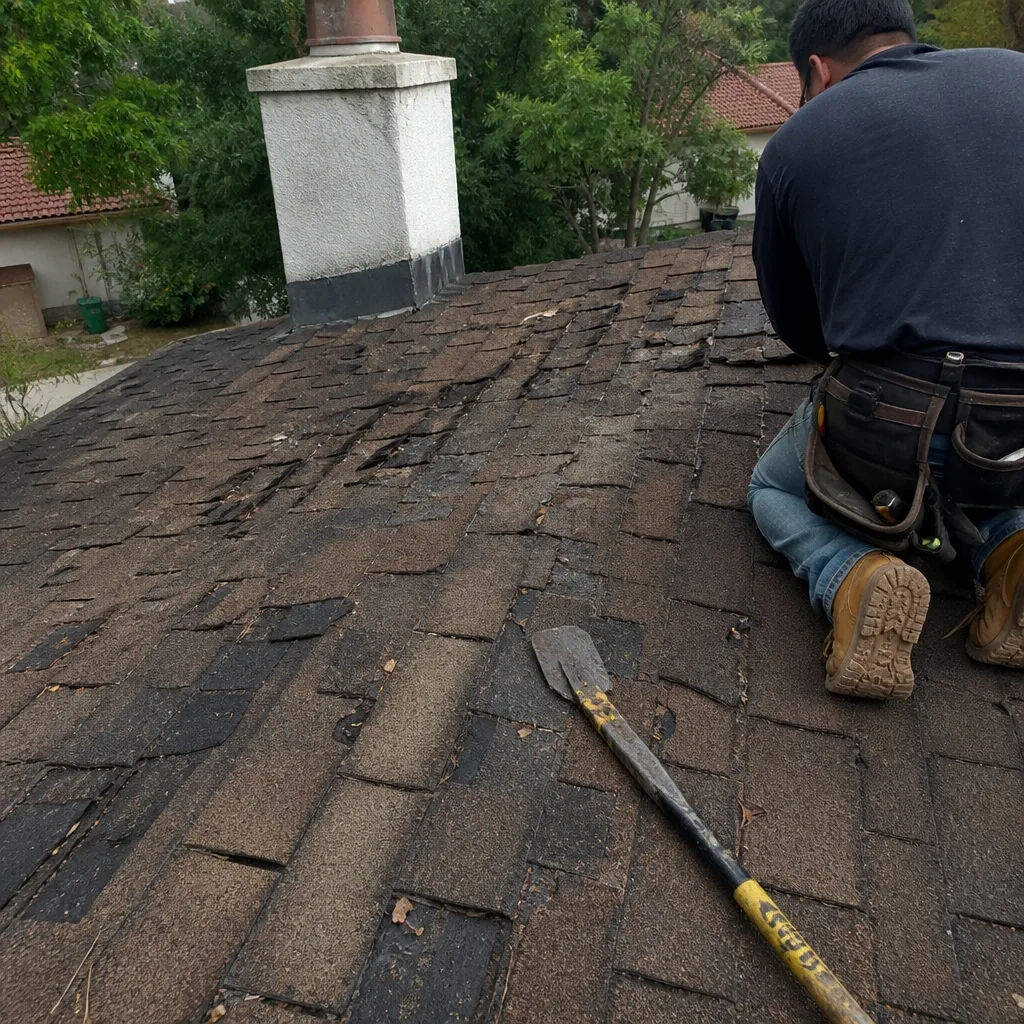 Before
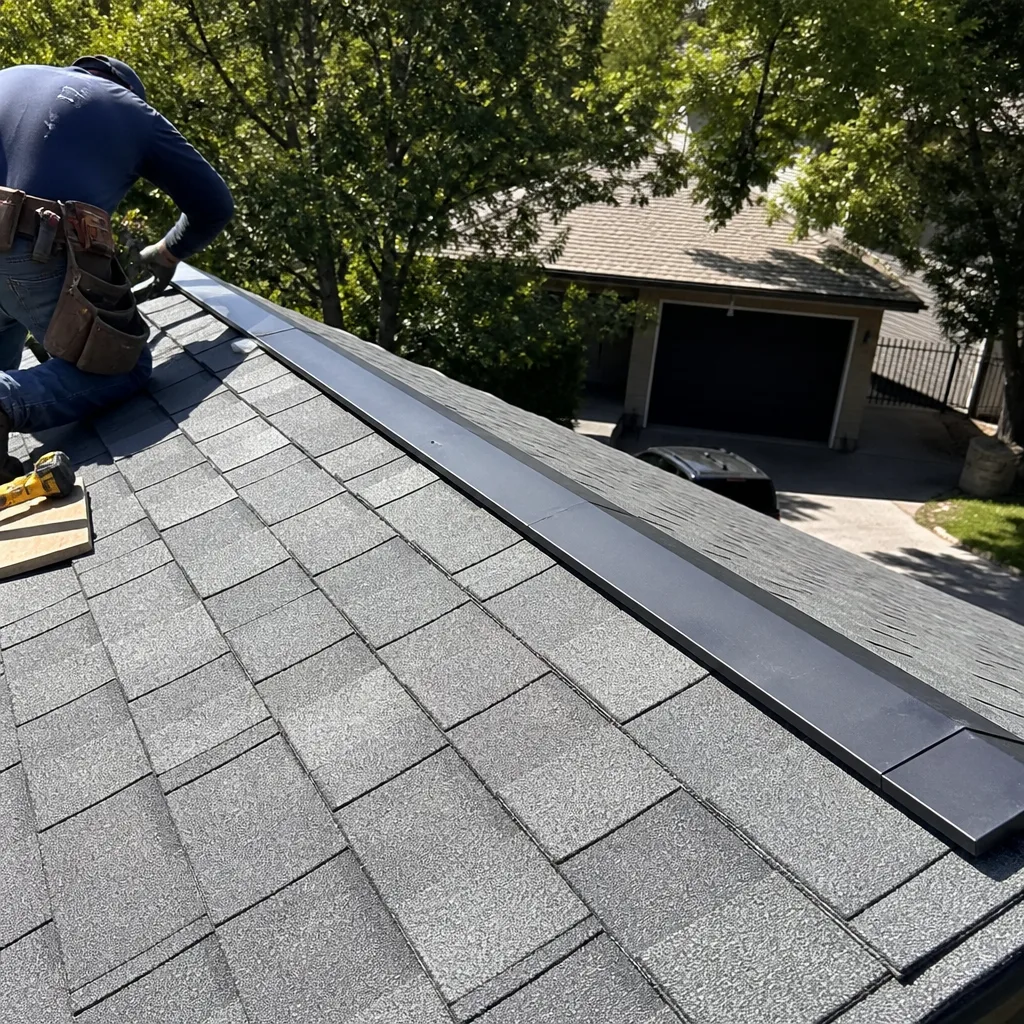 After
After